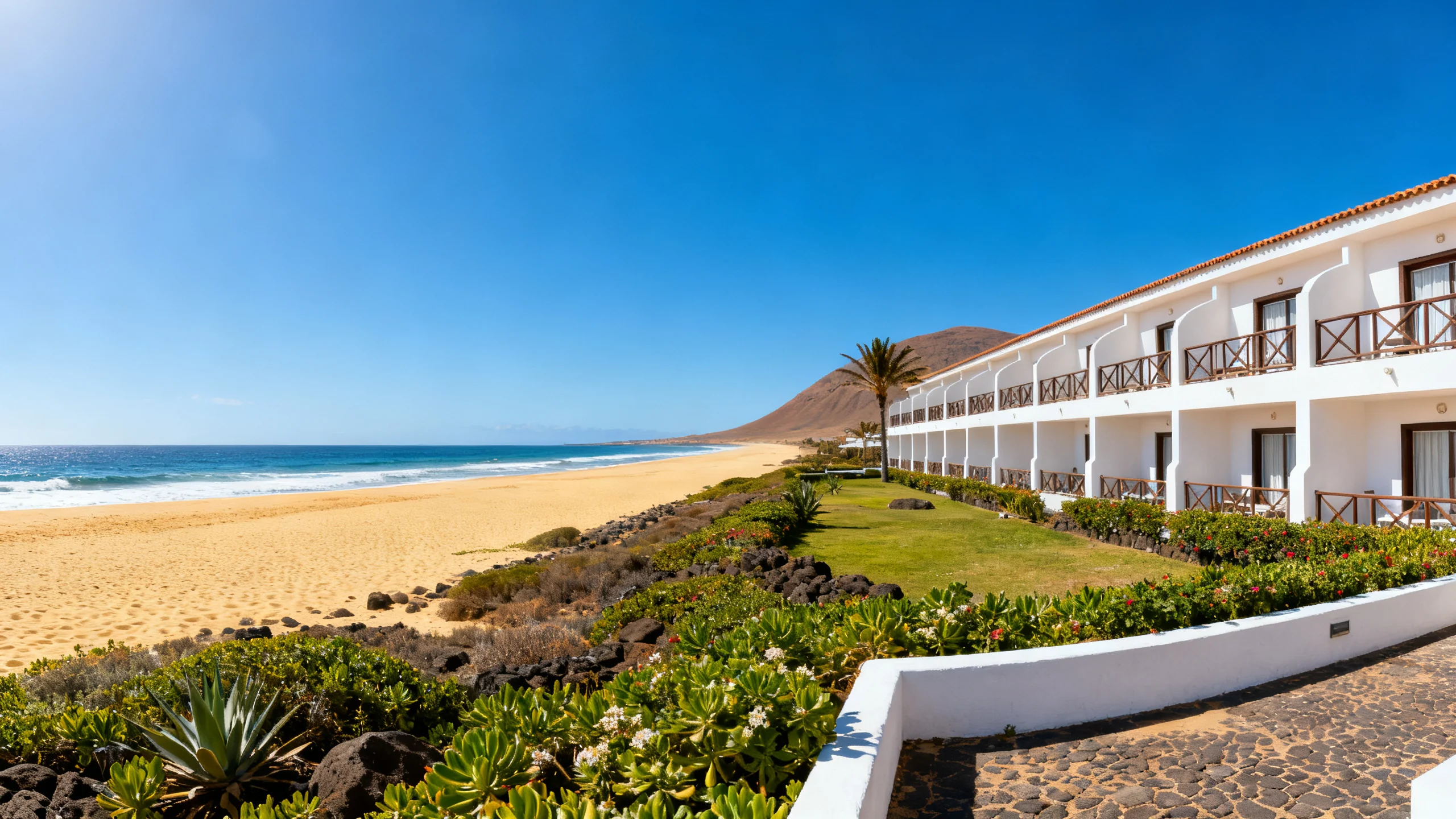
Where to stay on Porto Santo: the beachfront hotel strip, the town of Vila Baleira and quieter inland stays, plus the heavy summer peak and thin winter.
Porto Santo is small and built around one thing: a nine-kilometre arc of golden sand running the length of its south coast. That single fact shapes the where-to-stay decision, because almost everyone comes for the beach, and almost all the lodging is strung along it or just behind it.
The choices are fewer than on the main island and easier to weigh. The real variable is not the area so much as the season: Porto Santo is busy and lively in summer and very quiet the rest of the year, and that changes both prices and the feel of a stay.
This guide covers the beachfront hotel strip, the town of Vila Baleira, the quieter inland options, and the strong summer peak set against a thin winter.
The beachfront strip
The south coast is where the beach is, and the larger hotels line it: a run of resort hotels and aparthotels set back behind the sand, most with pools, several with direct beach access. This is the obvious choice for a beach holiday, and the reason most visitors come.
The advantage is the morning and evening. Day-trippers arrive on the ferry and leave on it, so the beach belongs to the people staying overnight in its quietest, best hours, early and late. A beachfront room means you simply walk out onto the sand.
The trade-off is price and season. The strip hotels are the most expensive on the island, and in July and August they fill completely. The same rooms drop sharply in spring and autumn.
Vila Baleira
Vila Baleira is the only town, a small low-key place of whitewashed houses and a palm-lined main square, set on the coast in the middle of the beach. Staying in or near the town gives you something the pure beach strip does not: restaurants, shops, a few bars and the small Columbus house-museum all within a walk.
Lodging here leans to guesthouses, small hotels and apartments rather than large resorts. It suits travellers who want the beach but also want to be able to walk to dinner and feel some local life around them. The beach is still close; Vila Baleira sits right on it.
Quieter inland and beyond
Step back from the coast and Porto Santo turns dry, rolling and open. There are scattered rural guesthouses and apartments inland and toward the quieter ends of the island, including the calm south-western tip at Ponta da Calheta.
These suit a specific traveller: someone who wants the slow, end-of-the-world quiet of the island more than instant beach access, and who has a car or a bicycle to cover the short distances. The island is flat and small enough that nothing inland is truly far from the sand. For most visitors, though, the beachfront or Vila Baleira will be the better fit.
The summer peak and the thin winter
Porto Santo’s calendar has two faces, and it pays to know which you are booking into.
Summer (roughly June to September) is the proper beach season: the warmest sea, the longest days and the island at its liveliest. August is the clear peak, when the beachfront fills and prices are highest. This is the time to come for the full beach-resort feel, but book early.
Spring and autumn (April to May, October) are calmer and cheaper. The sea is swimmable but cooler, the beach is quiet, and the island is pleasant for walking and golf. For many travellers this is the sweet spot.
Winter (November to March) is mild and sunny but genuinely sleepy. Hotels and restaurants thin out, the ferry schedule reduces, and the island feels half-asleep. It can be a peaceful low-cost escape, but it is not a beach holiday, and you should check what is actually open.
For the practical detail on reaching the island, see the Porto Santo region guide and the getting to Madeira guide.
Frequently asked questions
Where is the best area to stay on Porto Santo?
For a straightforward beach holiday, the beachfront strip on the south coast, where the resort hotels sit on the sand. For a mix of beach and town life, choose Vila Baleira, the only town, which still sits right on the beach. Inland stays suit travellers who value quiet over instant beach access.
When should I book a Porto Santo hotel?
For July and August, book months ahead: the island fills with Portuguese holidaymakers and the beachfront hotels sell out at peak prices. Spring, autumn and winter are far easier and cheaper, though in winter you should confirm your hotel and restaurants are actually open.
Is it worth staying overnight on Porto Santo, or just a day trip?
An overnight stay is the better experience. A ferry day return gives you only about seven hours, and the beach is at its best early and late, after the day-trippers have left. One to three nights lets the island’s slow rhythm take hold without overstaying.
Do I need a car if I stay on Porto Santo?
Not if you stay on the beach strip or in Vila Baleira, both walkable to the sand, with cheap taxis for the rest. A hire car, scooter or bicycle is useful for the viewpoints, the golf course and an inland stay. The flat terrain makes Porto Santo genuinely good for cycling.
Is Porto Santo worth visiting in winter?
It can be, as a mild and very quiet escape, but not as a beach holiday. The sea is too cool for most swimmers, and a number of hotels and restaurants reduce hours or close. If you go in winter, confirm your accommodation is open and check the reduced ferry schedule before booking.