Abseiling waterfalls and sliding rock pools in Madeira's laurel-forest ravines. What canyoning here involves, the levels on offer, and how to book safely.
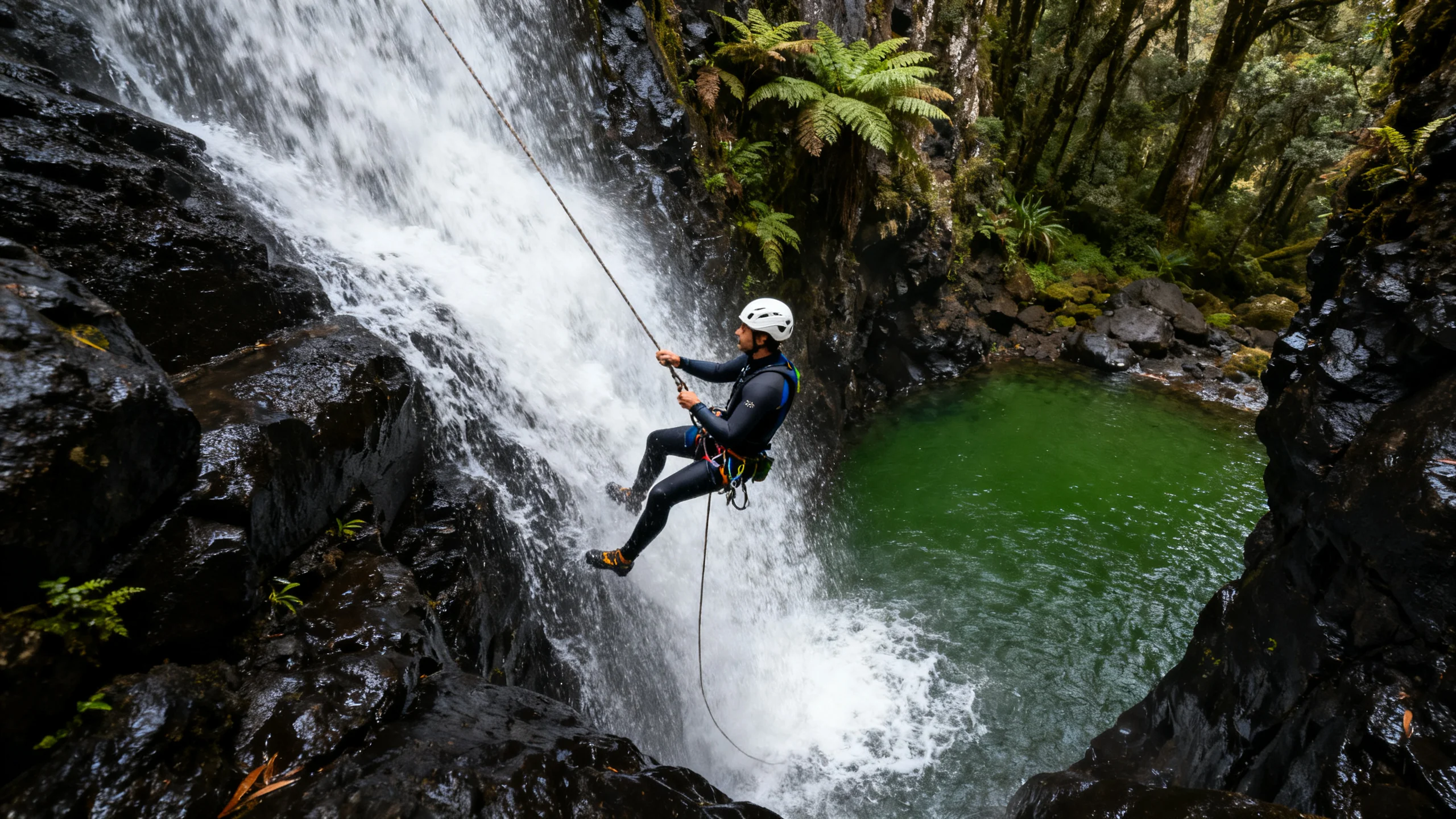
Madeira’s steep, water-cut ravines make it one of the better canyoning destinations in the Atlantic. Canyoning means descending a mountain stream from the inside: abseiling down waterfalls, sliding natural rock chutes, and jumping into plunge pools, working your way down through ground you could not otherwise reach. The island’s laurel-forest valleys, fed by year-round springs, give guides a real choice of routes.
This guide covers what canyoning in Madeira actually involves, the range of difficulty, what is provided, and how to choose a trip and an operator.
The activity, in brief
| Item | Detail |
|---|---|
| Where | Forested ravines, mainly in central Madeira and the north |
| Duration | Around 3 to 5 hours, including the transfer and the walk in |
| Difficulty | Demanding: physical, wet and committing, though routes are graded |
| Provided | Wetsuit, helmet, harness and technical kit, plus a qualified guide |
| Good for | Active travellers comfortable in water who want a real adventure day |
What a canyoning day is like
A trip usually starts with a pickup and a drive to the chosen valley, then a short walk in to the top of the route. The guide fits and checks your wetsuit, harness and helmet, and runs through the techniques on easy ground before the real descent begins.
From there you move down the ravine the way the water does. Some drops are abseiled on a rope; some are slid; some are jumped into the pool below, where the guide has checked the depth. Between the drops you scramble, wade and swim through short pools. The forest closes in around you, and the only way out is down.
It is genuinely physical and genuinely wet, but on a beginner route nothing is left to chance: the guide rigs every rope, sets every jump, and talks you through each move.
Difficulty and who it suits
Operators run routes at different grades.
Beginner and family routes keep the abseils short, the jumps optional and the water gentle. No experience is needed, and these suit first-timers and older children within an operator’s age limits.
Intermediate and advanced routes bring higher waterfalls, bigger abseils and more sustained scrambling, and ask for a decent level of fitness and a head for heights.
For any route you should be comfortable in water and able to swim. Tell the operator honestly about your fitness and experience so they place you on the right descent.
When to go
Canyoning runs through the warmer half of the year, broadly April to October, when the water is most bearable and the days are long. Wetsuits make it comfortable even so, because the spring-fed water stays cold.
Conditions depend on rainfall. The streams need water to be fun, but too much water makes a ravine unsafe, so operators read the weather and will move or postpone a trip after a heavy downpour. Treat that as a sign of a good operator, not an inconvenience.
Frequently asked questions
Do I need canyoning experience?
No. Operators run beginner routes specifically for first-timers, and the guide teaches the abseiling and movement techniques before the descent. You do need a reasonable level of fitness and to be comfortable in water. Experienced canyoners can ask for the harder routes.
Do I need to be a strong swimmer?
You should be able to swim and be at ease in water, since routes include short pools to cross and jumps to land in. You do not need to be an athletic swimmer, and a wetsuit adds buoyancy, but non-swimmers should not book a canyoning trip.
What should I bring?
The technical kit, including the wetsuit, helmet and harness, is provided. Bring a swimsuit to wear under the wetsuit, trainers or sturdy shoes that can get soaked, a towel and dry clothes for afterwards. Leave valuables behind.
Is canyoning safe?
With a qualified operator, on the right route for your level, in good conditions, it is a well-managed adventure sport. The risks come from going without a guide or descending after heavy rain. Book a licensed operator, be honest about your ability, and follow the guide’s call on the weather.