Diving the Garajau Marine Reserve off eastern Madeira, home to large dusky groupers in clear volcanic water. Conditions, marine life and try-dives.
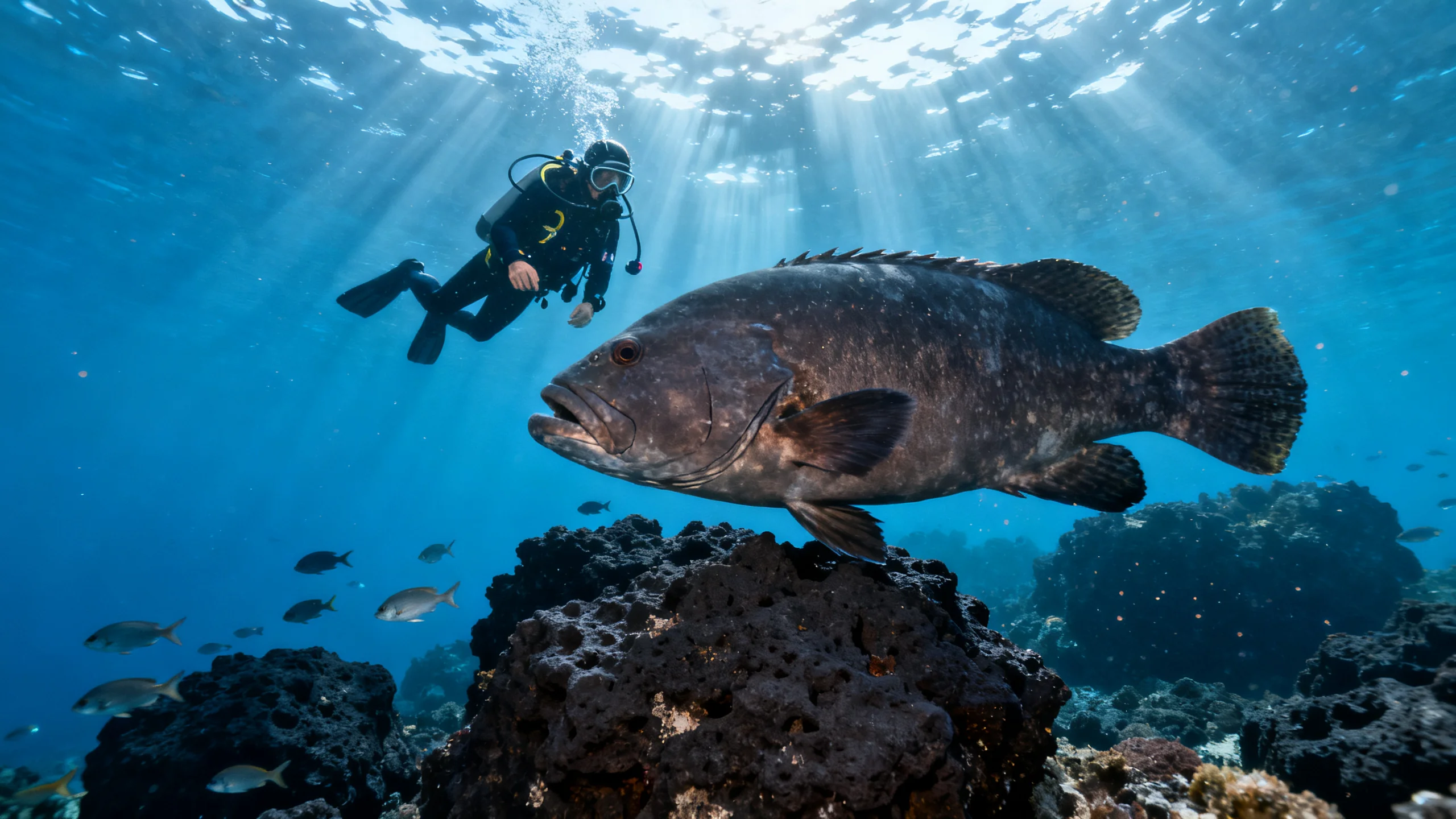
The Garajau Marine Reserve, off the coast just east of Funchal, is the best place to dive on Madeira. It is one of the oldest protected marine areas in Portugal, and decades of protection have produced what divers come for: large dusky groupers, unbothered by people, drifting over volcanic reef in clear, deep-blue water. The steep underwater terrain and the warm Atlantic do the rest.
This guide covers what you will see, the diving conditions, the options for beginners and certified divers, and when to go.
The diving, in brief
| Item | Detail |
|---|---|
| Where | The Garajau Marine Reserve, off Caniço de Baixo in eastern Madeira |
| Marine life | Large dusky groupers, rays, moray eels, barracuda, reef fish |
| Terrain | Volcanic rock, walls and slopes, depths suiting all levels |
| Water | Clear and warm by Atlantic standards, warmest from summer to autumn |
| Options | Try-dives for beginners, guided dives and courses for the certified |
What you will see
The signature sight is the dusky grouper. These are big, heavy fish, and inside the reserve they have grown used to divers, so they hold their ground and let you approach rather than bolting. Around them the reef carries rays, moray eels hidden in the rock, barracuda, octopus and dense shoals of smaller fish.
The landscape itself is part of the appeal. Madeira is a volcanic island and the coast continues underwater as rock walls, slopes and boulder fields, with good visibility in settled conditions. It is reef and rock diving rather than coral, and the protection inside the reserve is what makes the marine life so visible.
Conditions and who can dive
The water off eastern Madeira is clear and, for the Atlantic, comfortably warm, with the warmest temperatures from summer into autumn. A wetsuit is standard year-round.
The reserve has dives to suit every level. Shallower, sheltered sites work for beginners and for the first dives of a course; deeper walls and slopes give certified divers more to explore. Dive centres are based around Caniço de Baixo, on the edge of the reserve, and run boat and shore dives.
When to go
Diving runs year-round off Madeira, but the easiest window is from late spring through autumn, when the water is warmest, the sea is most often calm and visibility is at its best. Winter diving is still possible, with a thicker wetsuit and an eye on the swell.
As with any boat-based activity, sea conditions can move a dive or cancel it, so allow a little flexibility rather than booking your only free day.
Frequently asked questions
Can I dive Garajau without a diving licence?
Yes. Dive centres offer try-dives for people with no certification, where an instructor guides you on a short, shallow dive after a simple briefing. Certified divers can join guided dives at sites matched to their level, or take a full course.
Is the water cold?
By Atlantic standards the water off eastern Madeira is comfortably warm, especially from summer into autumn. It is not tropical, so you dive in a wetsuit, but it is mild enough for relaxed diving for much of the year.
Will I really see the big groupers?
Dusky groupers are the reserve’s best-known residents and are seen on most dives, but they are wild fish, so nothing is guaranteed. Years of protection have made them used to divers, which is why Garajau is known for close, unhurried encounters rather than fleeting glimpses.
Where are the dive centres based?
The centres serving the reserve are based around Caniço de Baixo, on the coast just east of Funchal and on the edge of the protected area. It is an easy base to reach, whether you are staying in eastern Madeira or driving over from Funchal.