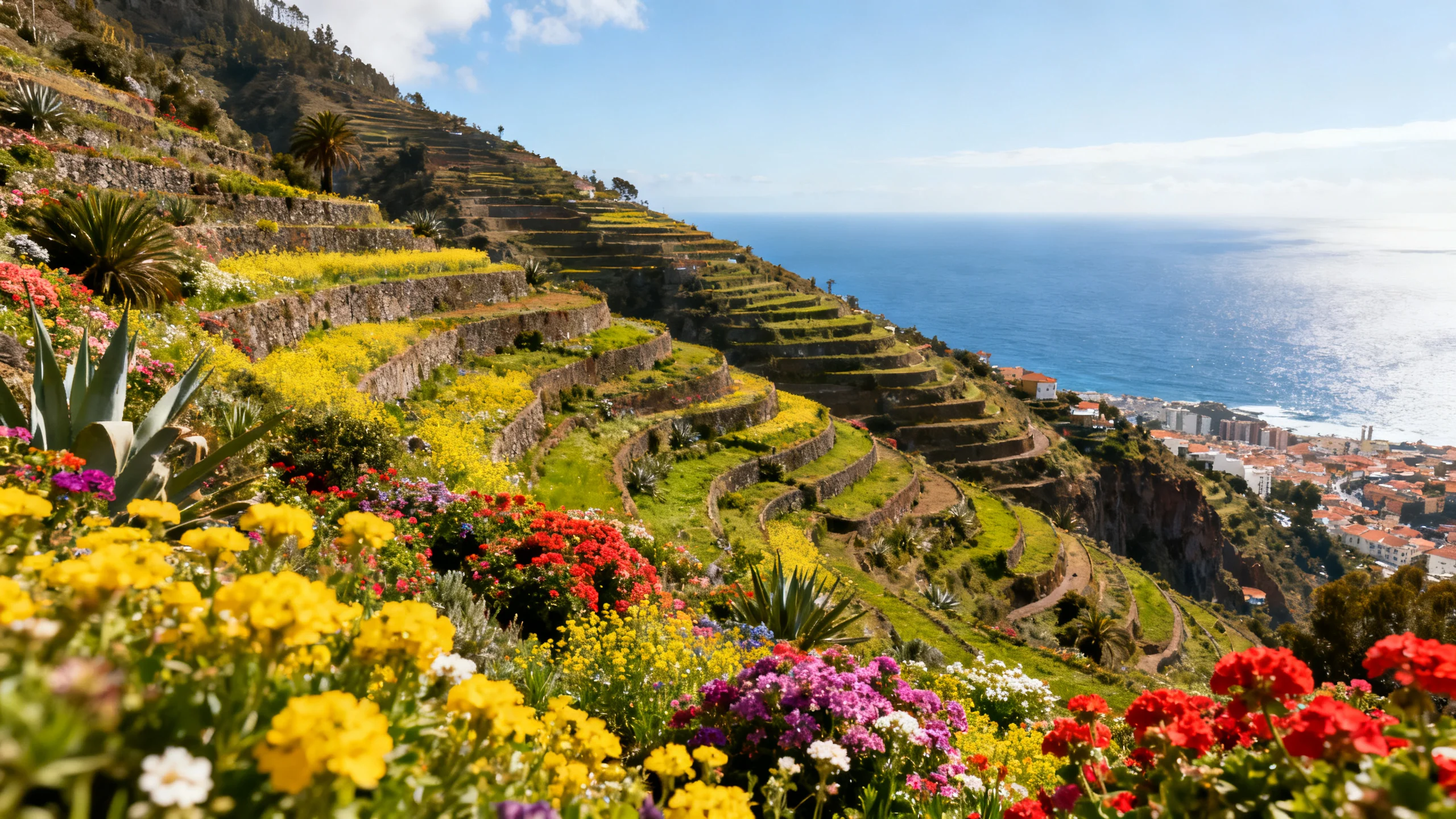
When to visit Madeira: mild weather all year, why spring and autumn are the sweet spot, the festivals worth timing for, and which months carry the price peaks.
Madeira does not have a bad season. The island sits far enough south, and is warmed enough by the ocean around it, that there is no winter to wait out and no summer that drives you indoors. That changes the question. It is not whether the weather will hold but what kind of trip you want, and what you are prepared to pay for it.
This guide covers Madeira month by month, the festivals worth planning around, the difference between the dry south and the wetter north, and the two periods when prices climb the hardest.
Madeira is mild all year
The headline first: Madeira’s south coast is comfortable in every month. Daytime highs in winter sit in the high teens Celsius, summer highs reach the mid to high twenties, and the sea never turns truly cold. Snow falls only on the highest peaks, and even there it is brief. There is no shoulder to survive and no heatwave to dread.
What changes through the year is rain, daylight, crowds and price, not really temperature. The wetter months are roughly October to March, the drier ones April to September, and the north coast catches noticeably more cloud and rain than the south in every season. For a fuller picture of how the island’s microclimates work, see the weather and climate guide.
Month by month
January and February. Cool, green and quiet, with the cheapest hotel rates of the year outside the New Year window. Days are short and the peaks can be cold, but the south stays mild and bright between rain bands. Camellias flower in the hillside gardens. A good choice for walkers who want the levadas to themselves and do not mind some wet days.
March. Winter loosening its grip. Rain still possible, but more bright spells and longer days. Low prices hold.
April, May and June. The first half of the sweet spot. Warm without being hot, long daylight, hillsides in flower, the sea warming up. Late April or early May brings the Flower Festival in Funchal, the island’s signature spring event. This is arguably the best all-round time to walk and to drive.
July and August. The warmest sea and the busiest island. The streets of Funchal fill, the popular trailheads need an early arrival, and hotel prices hit their summer peak. The weather is reliably dry and sunny. Good for a beach-led trip to Porto Santo, busier than you may want for quiet hiking.
September and October. The second half of the sweet spot, and many regular visitors’ favourite. The sea is at its warmest after the summer, the crowds ease, and prices come down from the August peak. Late August also brings the wine harvest, with the Madeira Wine Festival celebrating the picking.
November. Quiet and good value, with cooler, more changeable weather and the first proper rain bands of the wetter half. The south still has plenty of bright days.
December. Mild and festive. Funchal lights up for Christmas, and the build-up to the famous New Year fireworks brings the island’s single biggest price spike. The fireworks display over the harbour, once a Guinness record-holder, is a genuine spectacle, but book months ahead if you want to see it.
Festivals worth timing for
Madeira’s calendar has a few events that justify shaping a trip around them.
- The Flower Festival (Festa da Flor), in spring, fills Funchal with floral displays and a flower-carpet procession through the centre.
- The Atlantic Festival, in June, pairs Saturday-night firework competitions over the bay with a month of music.
- The Madeira Wine Festival, in late August and early September, marks the grape harvest with tastings and grape-treading in Funchal and Estreito de Câmara de Lobos.
- New Year, when the harbour fireworks draw cruise ships and a full island.
The two price peaks
Two windows are reliably the most expensive. The first is July and August, the summer holiday peak, when both flights and hotels climb. The second, and sharper, is the New Year period around the Funchal fireworks, when rooms in the city are booked far ahead at top rates. If your dates are flexible and budget matters, avoid both and you will spend noticeably less. The Madeira on a budget guide goes into the numbers.
Frequently asked questions
When is the best time to visit Madeira?
For the best balance of weather, daylight, crowds and price, aim for April to June or September and October. The weather is warm and settled, the sea is swimmable, and you avoid both the summer and the New Year price peaks. Madeira is mild all year, though, so no month is truly off-limits.
Is Madeira worth visiting in winter?
Yes. Winter days on the south coast stay in the high teens Celsius, the hillsides are green, and hotel rates are at their lowest outside the New Year window. Days are shorter and you should expect some rain bands, but for walkers who want quiet levadas it is a fine season.
When is the sea warm enough to swim?
The Atlantic around Madeira is at its warmest from roughly July to October, peaking in late summer. It is still swimmable for many people through spring and into autumn, and never drops to the cold of northern European waters. Winter swimming is for the hardier.
Which months are the most expensive?
July and August carry the summer holiday peak for flights and hotels, and the New Year period around the Funchal fireworks is the sharpest spike of all, with city rooms booked far ahead at top prices. Spring, autumn and winter outside the New Year window are all noticeably cheaper.
Is the north of Madeira wetter than the south?
Yes, in every season. The north coast and the central mountains catch the prevailing cloud and rain, which is why they are so green, while the south coast around Funchal stays drier and brighter. If a day is grey in the north, the south is often the place to head.