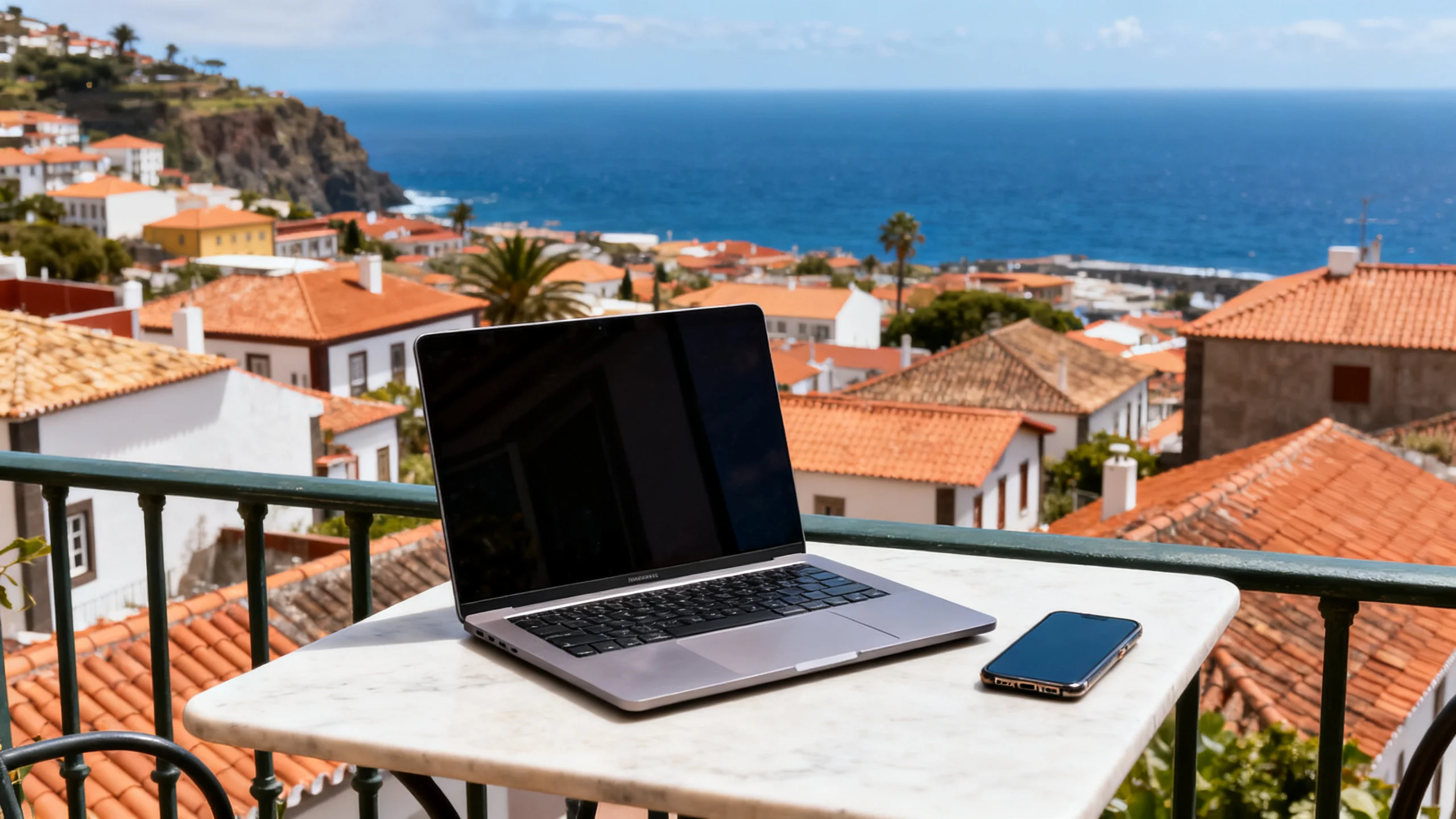
Staying connected in Madeira: Type C and F plugs at 230V, 4G and 5G coverage and where it weakens, prepaid SIMs and EU roaming, and the remote-work reality.
Madeira is well connected for an island in the middle of the Atlantic. The power is standard European, mobile coverage is good across the populated areas, and home broadband is solid enough that the island has built a reputation among remote workers. The catch is the terrain: signal drops in the deep valleys and the long road tunnels, and the further you get from the towns the patchier it becomes.
This guide covers the plugs and voltage, the state of 4G and 5G coverage, how to get a local prepaid SIM versus relying on EU roaming, and an honest read on what remote work from Madeira is actually like.
Power: plugs and voltage
Madeira uses the standard continental European setup. Sockets take Type C and Type F plugs, the round two-pin and the Schuko type, and the mains supply runs at 230 volts, 50 hertz.
Travellers from the UK, Ireland and outside Europe need a plug adapter. Most modern phone chargers, laptops and camera chargers are dual-voltage and handle 230 volts without a separate transformer, but check the label on anything with a heating element, such as a hairdryer, before plugging it in. Hotels sometimes keep a few adapters at reception, but bringing your own is simpler.
Mobile coverage: 4G and 5G
Mobile coverage on Madeira is good where people live. Funchal, the south coast, the larger towns and the main roads have reliable 4G, and 5G has rolled out across the populated areas, so for most of a typical trip your phone works well.
The terrain is what creates the gaps. Madeira is steep and folded, and signal weakens or drops in the deep valleys, in the laurel-forest interior, on the high ridges and inside the long road tunnels. On a remote levada walk you should expect stretches with no signal at all, which matters for safety: do not rely on a live phone connection deep on a trail, and tell someone your route before you set out, as the levada walks safety guide advises.
Getting a local SIM
How you handle data depends on where you are coming from.
EU and EEA visitors can use their home mobile plan in Madeira under EU roaming rules, which means your domestic allowance applies at no extra cost, within your operator’s fair-use limits. For most European visitors that is the simplest answer and you need to do nothing.
Visitors from outside the EU, including the UK after Brexit, should check their roaming charges, which can be steep, and will often save money with a local SIM or an eSIM. Madeira’s networks are the Portuguese operators MEO, NOS and Vodafone. Prepaid SIMs are sold at airport kiosks, operator shops and many newsagents, are inexpensive, and come with generous data bundles. You will usually need your passport to register one. An eSIM bought before you travel is an equally good option for a compatible phone, with no shop visit needed.
Internet and remote work
Madeira has positioned itself as a remote-work destination, and for short to medium stays it largely delivers. Home and apartment broadband in Funchal and the larger towns is generally fast and stable, fixed connections are good, and the island runs on the same time zone as mainland Portugal and the UK, which suits work with European and British teams.
The realistic picture, with the rough edges included:
- In Funchal and the south-coast towns, connectivity is reliable. Cafés, co-working spaces and most apartments have solid wifi, and a workday runs smoothly.
- In rural and mountain accommodation, broadband is more variable. A hillside quinta or a north-coast village may have a slower or less stable connection, so confirm the wifi situation with the host before booking if you need to work.
- Power cuts are uncommon but not unknown in remote spots during storms, so a charged laptop and phone are sensible insurance for an important call.
For a working stay, base in or near Funchal, treat the rural levadas and peaks as weekend trips, and you get a genuinely workable setup with the island on your doorstep.
Frequently asked questions
What plug and voltage does Madeira use?
Madeira uses Type C and Type F plugs, the standard continental European round two-pin and Schuko types, with a 230-volt, 50-hertz supply. Visitors from the UK, Ireland and outside Europe need an adapter, and most phone and laptop chargers handle 230 volts without a transformer.
Is mobile coverage good across Madeira?
Good where people live. Funchal, the south coast, the main towns and the main roads have reliable 4G, and 5G covers the populated areas. The terrain creates gaps, though: signal weakens or drops in deep valleys, the forested interior, the high ridges and the long road tunnels.
Do I need a local SIM card?
EU and EEA visitors can use their home plan under EU roaming rules at no extra cost, so no SIM is needed. Visitors from outside the EU, including the UK, should check roaming charges and will often save with a prepaid SIM from MEO, NOS or Vodafone, or with an eSIM bought before travelling.
Can I work remotely from Madeira?
Yes, and the island actively courts remote workers. Broadband in Funchal and the larger towns is fast and stable, co-working spaces exist, and the time zone suits European and UK work. Rural accommodation can have weaker connections, so base near Funchal for a working stay and confirm the wifi before booking.
Will my phone work on a levada walk?
Not reliably. Many levada and mountain routes run through deep valleys, forest and tunnels with no signal, so expect dead stretches. Do not depend on a live connection for safety on a trail: tell someone your route and expected return time before you set out.