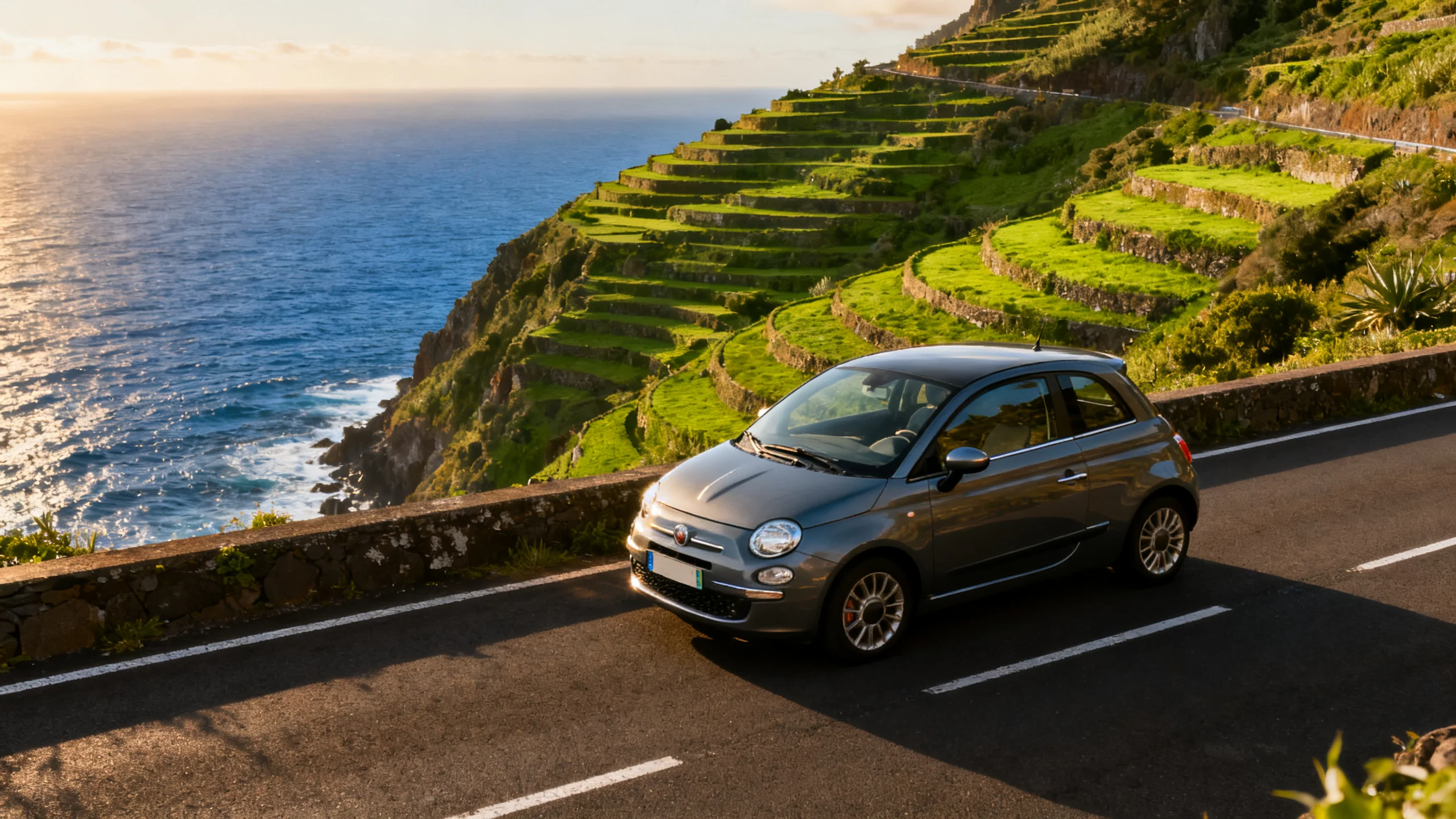
How to move around Madeira: when a hire car earns its keep, the fast VR1 tunnels, the slow mountain roads, and the bus networks that cover Funchal and the rural coast.
Madeira is small on the map and large in practice. The island is only about 57 kilometres long, but the terrain is vertical, the roads switch between modern tunnels and old cliff-hugging lanes, and a cloud bank can sit on the central massif while the south coast bakes in the sun. How you get around shapes the whole trip.
For most visitors the honest answer is a hire car, but not for every day and not in every part of the island. This guide covers when the car earns its keep, how the VR1 expressway and its tunnels collapse the distances, what the older mountain roads are really like, the buses that serve Funchal and the rural coast, parking, and the paperwork of driving here.
The hire car: when it earns its keep
A car is the most flexible way to see Madeira, and for the levada trailheads, the viewpoints and the north-coast villages it is close to essential. Public transport runs on a commuter timetable, not a tourist one, so it rarely lines up with a dawn start at Pico do Arieiro or a late finish on a long walk.
That said, you do not need the car for your whole stay. Funchal is walkable and well served by buses, and a car left in a hotel garage still costs you money and parking. The pattern that works for most trips: base in Funchal, use the city on foot, and hire a car only for the days you actually drive out. Collect it on the morning of your first day trip rather than at the airport.
Rates in 2026 sit at roughly the following daily prices, cheaper booked well ahead and in the low season, sharply higher in July, August and the New Year period.
| Class | Daily rate (low season) | Daily rate (peak) |
|---|---|---|
| Small car (Fiat 500, Polo) | EUR 25 to 40 | EUR 50 to 80 |
| Mid-size (Corolla, Golf) | EUR 35 to 55 | EUR 70 to 110 |
| Compact SUV | EUR 55 to 80 | EUR 100 to 160 |
Petrol runs around EUR 1.70 to 1.90 per litre. A small or mid-size car is the right pick for almost everyone: it is easier on the narrow old roads and in Funchal’s tight car parks. You do not need a four-wheel drive for any public road on the island.
The VR1 expressway and the tunnels
The thing that surprises first-time drivers is how fast Madeira can be. The VR1, the south-coast expressway, runs from the eastern end of the island past the airport, through Funchal and on to Ribeira Brava in the west, mostly in tunnels and on viaducts. A second route, the VE1, continues the modern road network toward Machico and the east, and tunnels cut through to the north coast as well.
The result is that the island’s distances are short in time even when they look long on a contour map. Funchal to the airport is about 20 minutes. Funchal to Ribeira Brava is around 25. Crossing the island to the north coast through the tunnels takes roughly 30 to 40 minutes. Before these roads were built the same journeys took hours on cliff ledges, and you can still feel that history when you leave the expressway.
The tunnels are long, well lit and easy to drive. Keep your headlights on as the signs require, and be aware that radio and mobile signal drop inside them.
The old mountain roads
Away from the expressway, Madeira’s roads are a different proposition. The older coastal and mountain routes are narrow, steep and full of blind bends, with gradients that will have a small car working hard. Many were the only road before the tunnels, and some, like the spectacular old north-coast road past Seixal, are now scenic alternatives rather than through-routes.
Two things catch visitors out. The first is fog: the central massif and the high passes can lose visibility in minutes, so slow right down and use your lights. The second is the surface after rain, which gets slick, especially under trees and near waterfalls that spill across the carriageway. Drive well below the limit on anything unfamiliar, use a low gear on long descents to spare the brakes, and pull into the passing bays to let locals through. They know the road and they are not in the mood to crawl behind a hire car.
Buses in Funchal and the rural coast
Madeira’s buses are a real option, not a token one, and for a Funchal-based trip without a car they cover a lot.
In and around Funchal, Horários do Funchal runs the orange city buses. They cover the centre, the Lido hotel district, Câmara de Lobos, Monte and the suburbs, with decent frequency through the day. Buy a rechargeable card or pay a slightly higher cash fare to the driver, and tap on board.
For the rest of the island, two main rural operators run the longer routes. Rodoeste covers the west and the north-west, including Ribeira Brava, Ponta do Sol, Calheta and Porto Moniz. SAM covers the east, including Machico, Caniçal and Santana. These lines are timed for residents and school runs, so departures thin out at weekends and in the evenings. They work well for reaching a town, less well for a tight hiking schedule.
Check current timetables before you rely on a rural bus, and always confirm the last return of the day.
Taxis, transfers and ride-hailing
Funchal has plenty of taxis, recognisable and metered, with fixed tariffs for common airport runs rather than open-ended meters. Bolt operates in and around Funchal and is often cheaper than a street taxi for city hops. Outside the capital, ride-hailing thins out fast, and you call a taxi by phone or ask your accommodation to book one. Pre-booked transfers are the simple choice for the airport if you are not collecting a car straight away.
Driving practicalities
Driving in Madeira is on the right. An EU or EEA licence is valid with no extra paperwork, and licences from many other countries are accepted for short tourist stays, though an International Driving Permit is a cheap safeguard if your licence is not in the Latin alphabet. The minimum hire age is usually 21, with a young-driver surcharge below 25.
Parking in central Funchal is paid and limited. Use the signed car parks rather than hunting for a kerb space, and expect to pay by the hour. Many hotels charge separately for parking, so check before you book if the car matters to you. Out in the villages parking is usually free and easy, the exception being honeypot spots like Porto Moniz or popular trailheads on a sunny weekend, where you should arrive early.
Frequently asked questions
Do I need a car for my whole stay in Madeira?
Usually not. Funchal is walkable and has good city buses, so many visitors hire a car only for the days they take day trips and rely on foot and bus the rest of the time. If you are based outside Funchal, or you want early starts at the mountain trailheads, a car for the full stay makes more sense.
How long does it take to cross Madeira by car?
Less time than the map suggests. The VR1 expressway and the cross-island tunnels mean Funchal to the north coast is around 30 to 40 minutes, and the airport is about 20 minutes from the city. The old mountain roads are far slower, so a scenic route will add a good deal of time.
Are the mountain roads safe to drive?
Yes, if you drive with care. The roads are well maintained but narrow, steep and full of blind bends, and fog can settle on the high passes in minutes. Slow down, use a low gear on long descents, keep your lights on in poor visibility, and use the passing bays to let locals through.
Can I rely on buses to see the island?
For reaching towns, yes. Horários do Funchal covers the capital and its surroundings well, and Rodoeste and SAM run longer routes to the west, north and east. The catch is frequency: rural lines are timed for residents and school runs, thin out at weekends and evenings, and rarely suit a tight hiking schedule. Always check the last return of the day.
Is parking a problem in Funchal?
Central Funchal parking is paid and limited, so use the signed car parks rather than circling for a kerb space. Many hotels charge extra for parking, which is worth checking before booking. Out in the villages parking is mostly free and easy, with popular trailheads and spots like Porto Moniz the exception on sunny weekends.