Madeira is a very safe destination. Where the real risks lie, how EU healthcare and the GHIC work, the Funchal hospital and pharmacies, and the emergency number.
Madeira is a very safe place to travel. Violent crime is rare, the streets of Funchal feel relaxed at night, and the everyday worries of many city destinations barely register here. If you are coming for the walking and the quiet, you have chosen well.
That does not mean there is nothing to think about. Madeira’s genuine risks are not crime but its landscape and its weather: the exposure of the mountains, the power of the Atlantic, the mountain roads and the strength of the sun. This guide covers where the real risks lie, how EU healthcare works here, the hospital and pharmacy network, the tap water, and what to do in an emergency.
Madeira is genuinely safe
Start with the reassuring part. Madeira has low crime, and tourists are not targeted in any organised way. Petty theft exists, as it does everywhere, mostly opportunistic pickpocketing in the busiest tourist spots and the occasional break-in to a car left with valuables on show. The usual sensible habits cover it: keep your phone and wallet secure in a crowd, do not leave bags visible in a parked car, and use the hotel safe for documents.
Solo travellers, including solo women, generally find Madeira comfortable and easy. Walking back through Funchal in the evening is not something locals or visitors think twice about. If your instinct from elsewhere is to be on guard, you can dial it down here.
The real risks: terrain, sea, roads, sun
The hazards that actually injure visitors to Madeira are environmental.
The mountains and the levadas. The walking is the island’s glory and its main risk. Narrow paths, unfenced drops, tunnels, fog and rockfall are real, and falls do happen. The levada walks safety guide covers this in detail. Match the route to your nerve and fitness, check the official trail status, and carry the right gear.
The Atlantic. The sea around Madeira is powerful. Currents, sudden swell and waves that break onto rocks and promenades catch people out, and the island has no gentle resort shoreline to soften it. Swim at the supervised lidos and sea-pools and sheltered bathing spots rather than off exposed rocks, watch for flags and warnings, and never turn your back on the ocean on a rocky shore.
The mountain roads. Steep, narrow, foggy roads are a hazard for drivers who treat them like a motorway. The getting around guide covers safe driving. Slow down, use low gears on descents, and respect the fog.
The sun. Madeira is far enough south that the sun is stronger than many northern visitors expect, and the sea breeze hides it. Sunburn and dehydration are easy to pick up on a long walk. Use a high-factor sunscreen, wear a hat, carry water, and do not underestimate a cloudy day, since the cloud thins the warning, not the burn.
EU healthcare, the GHIC and the EHIC
Madeira is part of Portugal, so for European visitors the healthcare picture is straightforward.
Travellers from the EU and EEA carry the European Health Insurance Card (EHIC), and UK travellers carry the Global Health Insurance Card (GHIC), the post-Brexit equivalent. Either card entitles you to state-provided medically necessary care in Portugal on the same terms as a resident, which usually means free or low-cost treatment in the public system.
The card is not a substitute for travel insurance. It does not cover repatriation, private clinics, or a mountain-rescue callout, and Madeira’s hiking means rescue cover is worth having. Take both: the EHIC or GHIC for routine public care, and a travel insurance policy that includes hiking and emergency repatriation. Visitors from outside Europe should rely on comprehensive travel insurance, as the cards do not apply to them.
Hospital, clinics and pharmacies
Funchal has the island’s main hospital, with a full emergency department, and there are health centres in the larger towns and private clinics in and around the capital. For anything serious, Funchal is where you will be treated, and the island is small enough that you are rarely far from it.
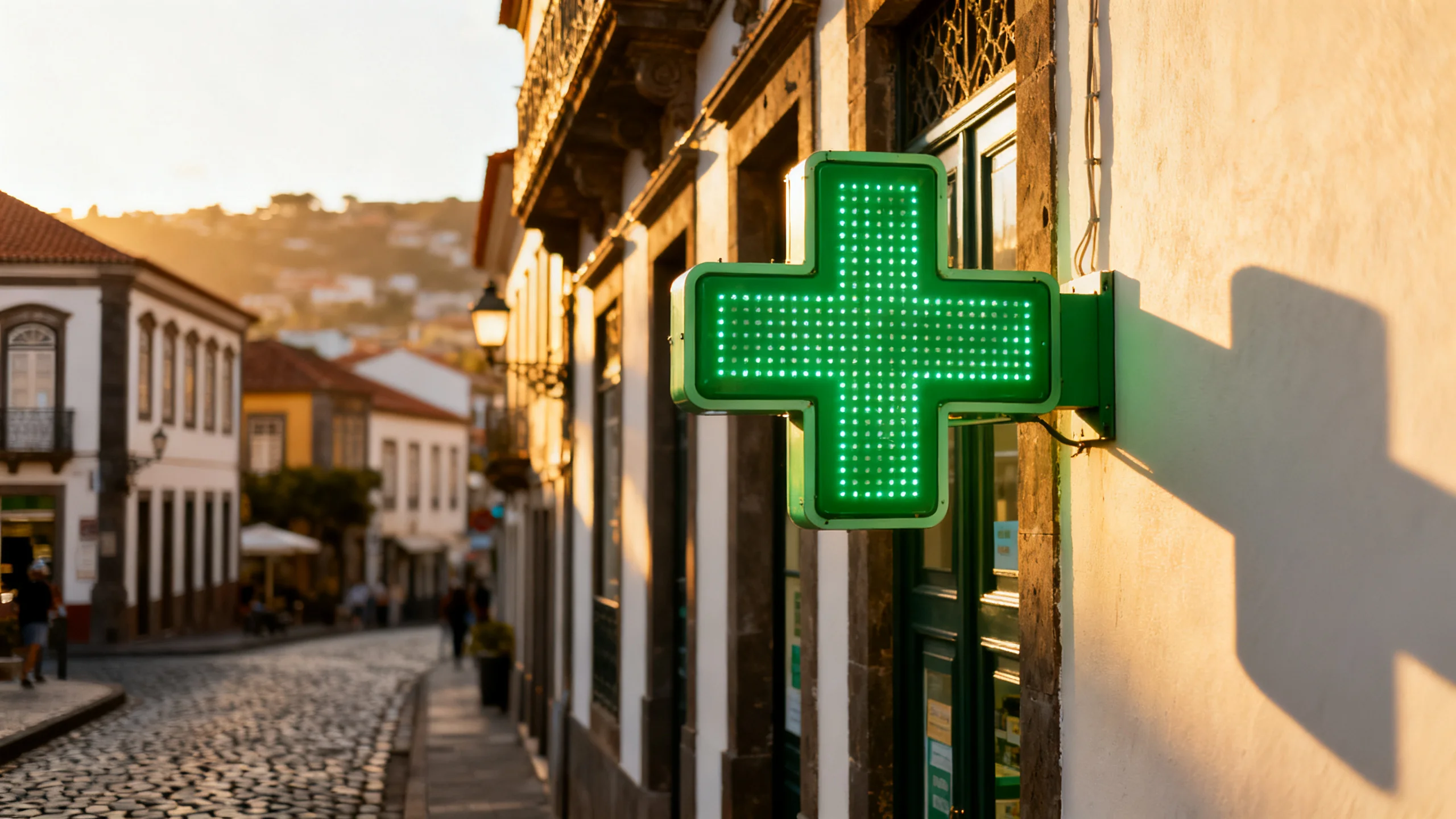
Pharmacies, marked by the standard green cross, are widespread, well stocked and helpful for minor ailments, and pharmacists often speak some English. They can advise on and sell many remedies over the counter, and a rota system keeps at least one open out of hours in the main towns. Bring any prescription medication you need in sufficient quantity, in its original packaging.
Tap water and food
Tap water in Madeira is safe to drink. You do not need bottled water, and filling a reusable bottle from the tap is fine for drinking and for the levada walks. Food hygiene standards are good, and eating out, including the fresh fish and seafood the island is known for, carries no special risk. The usual common-sense applies, and no more.
Emergencies
The single emergency number across Portugal, including Madeira, is 112. It reaches police, fire and ambulance, and operators can handle calls in English. Use it for any genuine emergency, including a hiking accident or someone in difficulty in the sea. For a less urgent health question, a pharmacy or a health centre is the right first stop, and your accommodation can point you to the nearest. Save 112 in your phone before you start walking.
Frequently asked questions
Is Madeira a safe place to travel?
Yes, very. Violent crime is rare, Funchal feels relaxed at night, and solo travellers generally find the island comfortable. The genuine risks are environmental rather than criminal: the exposure of the mountain trails, the power of the Atlantic, the mountain roads and the strength of the sun.
Does my EHIC or GHIC card work in Madeira?
Yes. Madeira is part of Portugal, so the EHIC for EU and EEA visitors and the GHIC for UK visitors both entitle you to state-provided medically necessary care on the same terms as a resident. The card does not cover private care or repatriation, so take travel insurance as well.
Can I drink the tap water in Madeira?
Yes. Tap water across Madeira is safe to drink, so you do not need to buy bottled water and can fill a reusable bottle from the tap for drinking and for the levada walks.
Where is the hospital and how do I find a pharmacy?
Funchal has the island’s main hospital with a full emergency department, and the larger towns have health centres. Pharmacies, marked by a green cross, are widespread and helpful for minor ailments, with a rota keeping one open out of hours in the main towns. The island is small, so Funchal is rarely far away.
What is the emergency number in Madeira?
The emergency number is 112, the same across all of Portugal. It reaches police, fire and ambulance, and operators can take calls in English. Save it before you start hiking, and use it for any genuine emergency, including a trail accident or trouble in the sea.