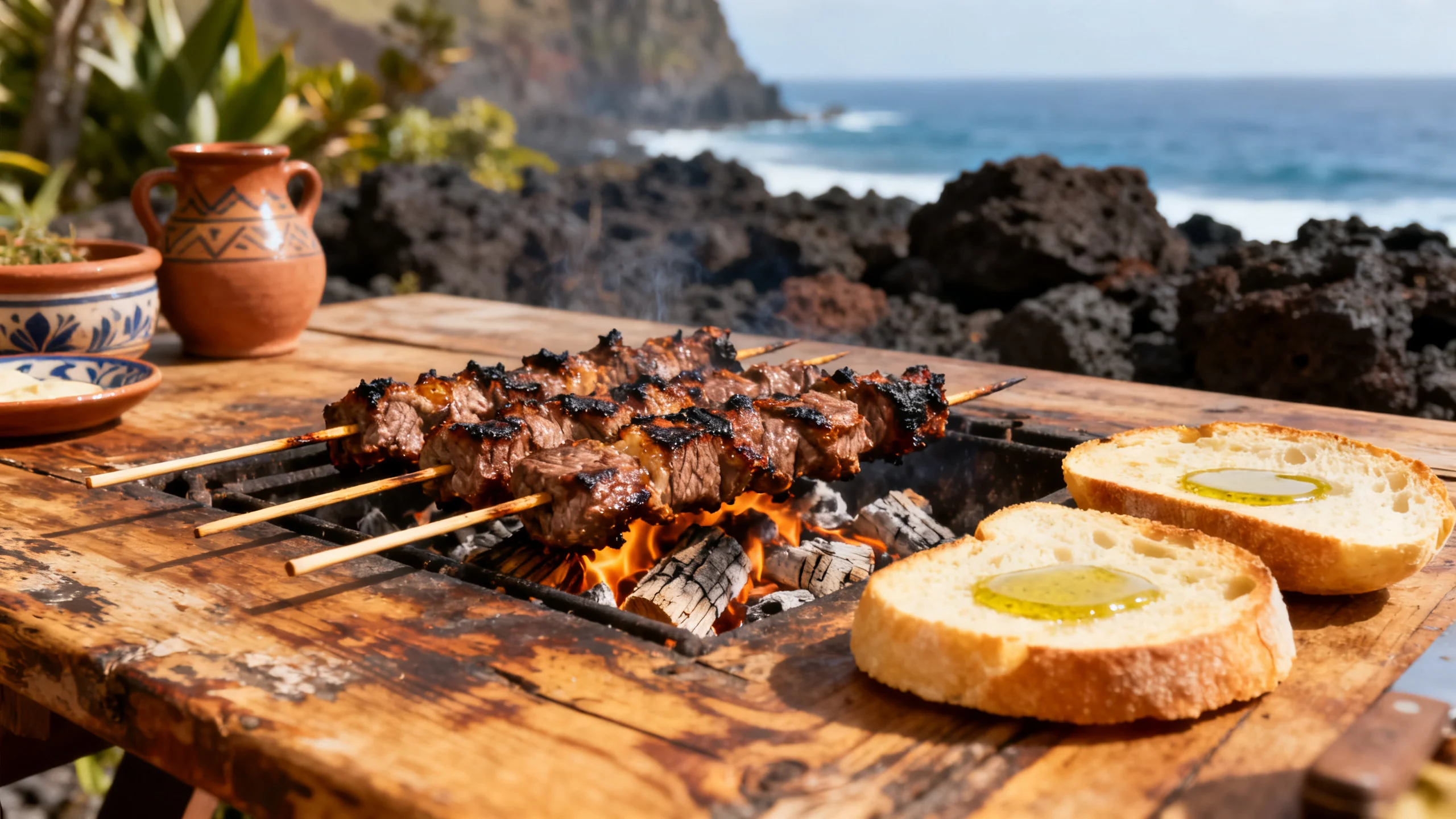
A guide to Madeira food and drink: espetada, bolo do caco, espada com banana, lapas, the fortified Madeira wine, poncha, and the Mercado dos Lavradores.
Madeiran food is honest, generous and tied to the island that grows it. It is not a refined cuisine and it does not try to be. It is grilled meat over wood, fish pulled from the Atlantic that morning, flatbread baked on a hot stone, and fruit ripened on volcanic terraces. Paired with the fortified wine that carries the island’s name around the world, it makes Madeira a genuinely good place to eat.
This guide covers the dishes you should not leave without trying, the famous Madeira wine and where to taste it, the sugarcane drink called poncha, the covered market in Funchal, and how to find the good local lunch rather than the tourist plate.
The dishes to try
A handful of dishes define Madeiran eating, and most appear on menus across the island.
Espetada. The island’s signature dish: chunks of beef, traditionally seasoned with garlic and bay, skewered and grilled over wood. The classic version arrives on a long metal or laurel skewer, often hung from a stand at the table. It is simple, smoky and very good, and it is best at the no-frills grill-houses inland rather than the polished tourist spots.
Bolo do caco. Despite the name, this is not a cake but a round flatbread, traditionally baked on a flat stone, served warm and almost always spread with garlic butter. It comes alongside nearly everything, turns up as a sandwich from bakeries and stalls, and is one of the small pleasures of the island.
Espada com banana. Black scabbard fish, the long eel-like fish landed in the deep waters off the island, served as fillets and, in the Madeiran style, paired with fried banana. The sweet-and-savoury combination sounds odd and works better than it should. It is the dish that most divides visitors, and worth trying once to decide for yourself.
Lapas. Limpets, grilled in the shell with garlic butter and a squeeze of lemon, served as a starter. Cheap, briny and good with a cold drink.
The small banana. Madeira grows a small, sweet, intensely flavoured banana on its coastal terraces. It is not just a local crop but a noticeably better banana than the supermarket standard, and it appears in everything from the espada dish to cakes and the fruit stalls.
Madeira wine and the lodges
The island’s most famous export is its fortified wine, and understanding it adds a lot to a visit. Madeira wine is fortified with spirit and then deliberately heated and aged, a process born of long sea voyages in barrel, which gives it a cooked, complex, almost indestructible character: an opened bottle keeps for months.
It is made in a range of styles, from bone-dry Sercial through medium Verdelho and Bual to the rich, sweet Malmsey. The dry styles work as an aperitif, the sweet ones as a dessert wine, and a tasting flight is the best way to find what you like.
The place to do that is a wine lodge in Funchal. The lodges run tours and tastings that walk you through the styles and the ageing process, and a Madeira wine tasting is an easy, worthwhile hour or two even if wine is not usually your thing.
Poncha
Madeira’s traditional drink is poncha, made from aguardente de cana, the local sugarcane spirit, mixed with honey and citrus, usually lemon or orange. It is stirred to order with a wooden tool called a caralhinho, and it is stronger than it tastes, which is the warning.
The spiritual home of poncha is Câmara de Lobos, the fishing village west of Funchal, where small bars have made it for generations. Variations using passion fruit and other fruits are common now. Treat it with respect: it goes down easily and it does not stay gentle.
The Mercado dos Lavradores
The covered market in Funchal, the Mercado dos Lavradores, is the best single introduction to Madeiran produce. The 1940 building is worth seeing for itself, tiled with painted azulejo panels, and inside, growers from the hills lay out custard apples, passion fruit, the small banana and tropical fruit you may not recognise. The fish hall downstairs sells the morning’s catch, including the black espada.
One honest warning: the upper-level fruit vendors will press samples on you and then quote high prices. Taste what you are offered, enjoy it, and feel free to walk away without buying. Go early for the liveliest atmosphere.
Eating well, not just touristy
The gap between a good Madeiran meal and a forgettable one is mostly about location. The busiest squares and the prime terraces of Funchal’s old town serve fine food at a markup, aimed squarely at passing visitors. A few streets back, and in the inland villages, the same dishes are cheaper and often better cooked.
Look for the prato do dia at lunch, for grill-houses where the wood smoke is real, and for places full of local diners rather than menus in six languages. The budget guide goes further into eating cheaply, and the Portuguese phrases guide gives you the words to order with confidence.
Frequently asked questions
What is the must-try dish in Madeira?
Espetada, the wood-grilled beef skewer, is the island’s signature dish and the one most visitors single out. Bolo do caco flatbread with garlic butter comes with almost everything, and espada com banana, scabbard fish with fried banana, is the unusual local pairing worth trying once.
What is Madeira wine and how is it different?
Madeira wine is fortified and then deliberately heated as it ages, which gives it a cooked, complex character and remarkable keeping qualities. It is made in styles running from bone-dry Sercial to sweet Malmsey. A tasting flight at a Funchal wine lodge is the best way to learn which style suits you.
What is poncha?
Poncha is Madeira’s traditional drink: sugarcane spirit mixed with honey and citrus, stirred to order. The fishing village of Câmara de Lobos is its spiritual home. It tastes mild and is stronger than it seems, so treat it with respect.
Is the Mercado dos Lavradores worth visiting?
Yes, for the building, the produce and the fish hall, and it is best early. One caution: the upper-level fruit vendors press free samples on visitors and then quote high prices, so taste what you like and feel free to walk away without buying.
How do I avoid tourist-trap restaurants?
Walk a few streets back from the busiest squares and the prime old-town terraces, where prices are marked up for passing visitors. Look for the prato do dia at lunch, grill-houses with real wood smoke, and places full of local diners. Inland villages reliably cook the classics well for less.