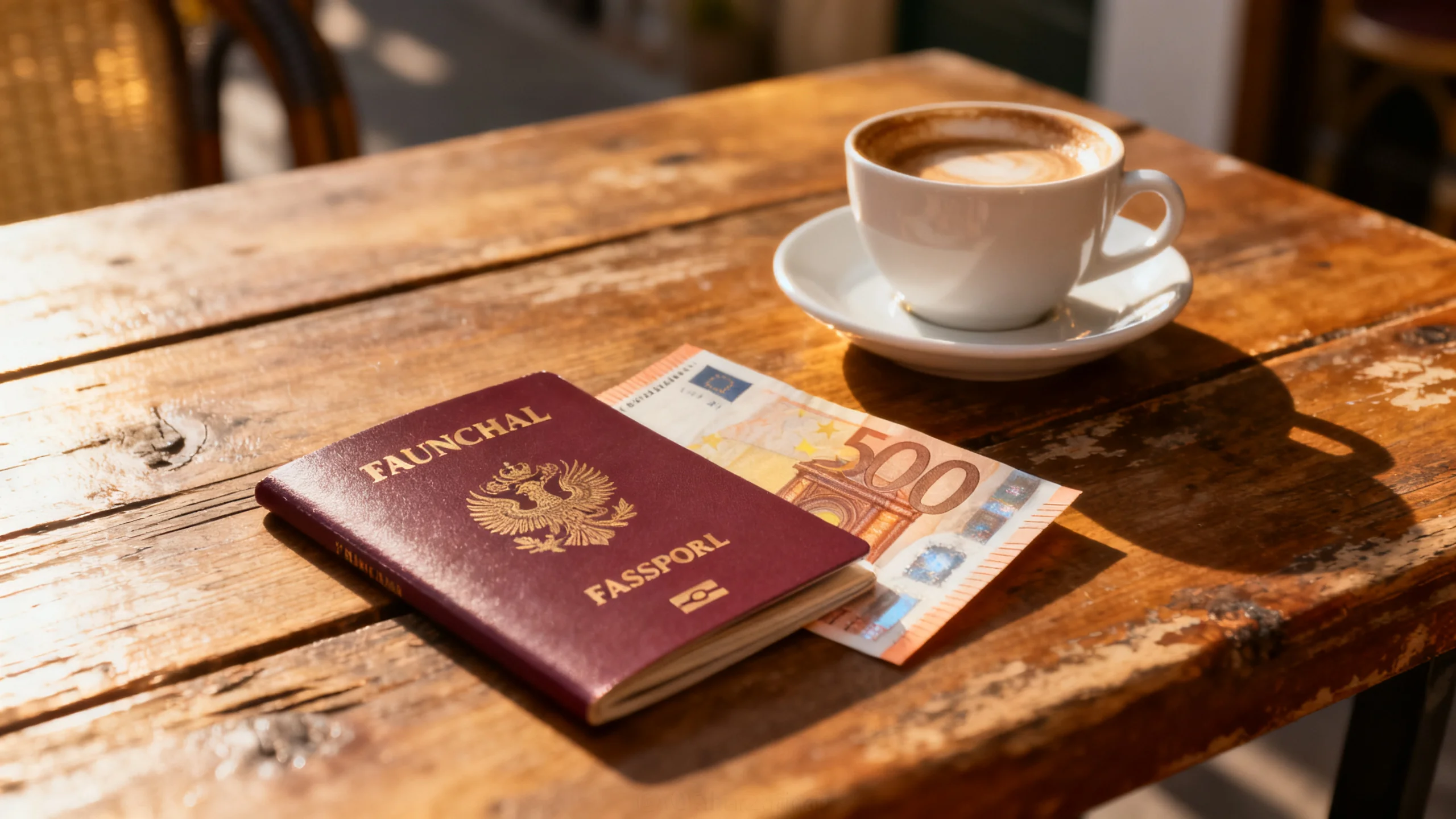
Entry rules for Madeira: Schengen and the 90/180 rule, ETIAS from 2026, post-Brexit notes for UK visitors, plus the euro, cards, ATMs and tipping norms.
Madeira is a region of Portugal, and Portugal is in the European Union and the Schengen area. For most European travellers that makes the paperwork of getting here close to nothing: you arrive as you would in mainland Portugal. For visitors from outside the EU, including the UK after Brexit, there are a few rules worth knowing before you book.
This guide covers Madeira’s status, the Schengen 90/180 rule, the new ETIAS authorisation arriving in 2026, the post-Brexit picture for UK travellers, and then the money side: the euro, how widely cards are accepted, ATMs and tipping.
Madeira is part of Portugal and Schengen
Madeira is an autonomous region of Portugal, not a separate country, and it sits inside both the European Union and the Schengen area. Arriving from another Schengen country, including mainland Portugal, you cross no border in the formal sense, and a flight from Lisbon to Funchal is a domestic hop.
This means the entry rules for Madeira are simply the entry rules for Portugal. There is no separate island visa, no extra island formality, and no customs quirk specific to Madeira beyond standard Portuguese and EU rules.
EU and EEA visitors
Travellers from the EU, the EEA and Switzerland have the simplest position. You can enter Portugal, and therefore Madeira, with a valid national identity card or passport, and there is no limit on the length of a tourist stay. You travel as you would within your own country. The healthcare side is covered in the health and safety guide.
The Schengen 90/180 rule
Visitors from many non-EU countries, including the United Kingdom, the United States, Canada, Australia and others, can enter the Schengen area, and so Madeira, without a visa for short stays. The limit is the 90/180 rule: you may stay up to 90 days within any rolling 180-day period across the whole Schengen area combined.
The key word is rolling. The 180-day window moves with you, so it is worth counting carefully if you make several trips to Europe in a year, because days spent in other Schengen countries count toward the same allowance. Overstaying carries real penalties, so if you plan a longer stay you need the appropriate national visa.
ETIAS from 2026
A change is coming for visa-exempt non-EU travellers. ETIAS, the European Travel Information and Authorisation System, is the EU’s new pre-travel authorisation, expected to become a requirement during 2026.
Once it is in force, visa-exempt visitors from outside the EU will need to apply for an ETIAS authorisation online before travelling, pay a small fee, and receive approval linked to their passport. It is not a visa and the process is designed to be quick, but it is a step you must complete before you fly. Because the exact start date and the transition arrangements have shifted before, check the current official position for your nationality when you book, rather than assuming the rules of a previous trip still hold.
Post-Brexit notes for UK visitors
UK travellers are now treated as non-EU visitors for Madeira. In practice that means:
- You enter on a passport, not an identity card, and it should meet the standard validity rules for the Schengen area.
- You are subject to the 90/180 rule rather than free movement.
- You will need an ETIAS authorisation once that system is live.
- Passports are stamped, and you use the non-EU lanes at passport control.
- For healthcare, the UK’s GHIC replaces the old EHIC.
None of this makes a Madeira trip difficult. It just means a UK visitor should treat the formalities the way any non-EU visitor would, and check passport validity and the ETIAS position before booking.
The euro, cards and ATMs
Madeira uses the euro. Card payment is close to universal: hotels, restaurants, supermarkets, car-hire desks, attractions and even many small cafés and market stalls take contactless and chip-and-PIN cards without fuss. Contactless is the norm, and a phone wallet works in most places.
Even so, carry a modest amount of cash. A few rural cafés, small guesthouses, a village taxi or a market vendor may prefer or only take cash, and parking machines and the toboggan-style novelty rides are easier with coins. ATMs, locally part of the Multibanco network, are widespread in Funchal and the larger towns, less so in remote villages, so draw cash before heading into the interior. If a machine offers to convert the amount to your home currency, decline it and pay in euros for a better rate.
Tipping norms
Tipping in Madeira is modest and not obligatory. Restaurant service is not heavily tip-dependent the way it is in some countries, and a service charge is not usually added.
For good restaurant service, rounding the bill up or leaving roughly five to ten per cent is generous and appreciated. In a café or bar, leaving the small change is plenty. For taxis, rounding up to a convenient figure is normal. Tipping a helpful hotel porter or a hiking guide a few euros is a kind gesture rather than an expectation. No one will chase you for a tip, and modest is the right register throughout.
Frequently asked questions
Do I need a visa to visit Madeira?
Madeira follows Portugal’s rules. EU, EEA and Swiss visitors need no visa and have no stay limit. Visitors from many non-EU countries, including the UK and the US, can visit visa-free under the Schengen 90/180 rule, and will need an ETIAS authorisation once that system is live in 2026.
How does the Schengen 90/180 rule work?
Visa-exempt non-EU visitors may stay up to 90 days within any rolling 180-day period across the whole Schengen area. The window moves with you, and days in other Schengen countries count toward the same total, so count carefully if you make several European trips in a year.
What is ETIAS and will I need it?
ETIAS is the EU’s pre-travel authorisation for visa-exempt non-EU visitors, expected to become a requirement during 2026. You apply online, pay a small fee and get approval linked to your passport before flying. It is not a visa. Check the current official position when you book, as the start date has shifted before.
Can I pay by card everywhere in Madeira?
Almost. Card and contactless payment is accepted across hotels, restaurants, shops, car hire and attractions, and even many small cafes and market stalls. Still carry some cash for rural cafes, village taxis, parking machines and the occasional cash-only vendor. ATMs are common in towns, fewer in remote villages.
How much should I tip in Madeira?
Modestly, and it is not obligatory. For good restaurant service, round up or leave roughly five to ten per cent. In cafes and bars, leaving the small change is plenty, and rounding up a taxi fare is normal. No service charge is usually added, and no one will chase you for a tip.