A clear-eyed look at Madeira costs: daily spend by traveller type, accommodation and car-hire prices, where to eat cheap, and how the free levadas keep the bill down.
Madeira is one of the better-value warm-weather destinations in Europe, and it rewards travellers who know where the money goes. The headline costs are flights and a hire car. Once you are on the island, the daily spend is comfortably modest, especially if you eat the way locals eat and lean on the island’s free star attraction, the levada walks.
This guide covers realistic daily budgets by traveller type, what accommodation and car hire actually cost, the price of the headline attractions, the gap between a local lunch and a tourist menu, and where to keep the bill down.
Daily spend by traveller type
The figures below are per person per day in 2026, excluding flights and the one-off cost of a hire car, and assume the cheaper shoulder season. Peak summer and the New Year period push everything up.
| Traveller type | Daily spend per person | What it looks like |
|---|---|---|
| Budget | EUR 45 to 70 | Guesthouse or dorm, prato do dia lunches, levadas, buses |
| Mid-range | EUR 90 to 150 | Comfortable hotel, restaurant dinners, a shared car, a paid attraction or two |
| Comfortable | EUR 180 and up | Quinta or four-star hotel, full-service dinners, tours, no penny-counting |
A budget trip on Madeira is genuinely pleasant rather than a grind. The walking is free, the views cost nothing, and the cheap local food is some of the best food on the island.
Accommodation
Accommodation is where mid-range and budget travellers diverge most. Guesthouses, rural rooms and small apartments in or near Funchal start from roughly EUR 45 to 80 a night in the low season. A comfortable three or four-star hotel runs around EUR 90 to 180, and the hillside quintas and the top hotels climb well above that. Self-catering apartments make sense for stays of several nights or for families, since they cut the food bill.
Two levers move the price most: the season, with summer and New Year far dearer, and the location, with central Funchal pricier than the suburbs or the rural coast. Booking a few months ahead for the popular periods is worth real money.
The car and fuel
A hire car is the single biggest on-island cost for many trips. Expect roughly EUR 25 to 40 a day for a small car in the low season, more in summer, with collision-damage cover adding to that if you do not have it through a card. See the getting around guide for the full breakdown.
Two ways to trim it. First, hire the car only for the days you actually drive out and use Funchal on foot and by bus the rest of the time, rather than paying for a car to sit in a garage. Second, fuel is a real line item on a hilly island, at around EUR 1.70 to 1.90 per litre, but Madeira is small, so total mileage stays low.
What the headline attractions cost
Most of Madeira’s best experiences are walks, and walks are free. The paid attractions are a smaller part of the picture than in many destinations.
- The Monte cable car is a moderate ticket, more if you add the return leg or combine it with the toboggan ride.
- The wicker toboggan from Monte is a short, novelty ride priced per sledge, so splitting it between two passengers helps.
- Boat trips, including whale and dolphin watching, run a typical half-day-tour price.
- Guided activities like canyoning cost more, as you would expect for equipment and a guide.
- Wine-lodge tastings are inexpensive for a basic flight and scale up with the rarity of the wines.
If money is tight, you can build a full and satisfying week around free levada walks, viewpoints and town wandering, and pick just one or two paid experiences to splurge on.
Eating: prato do dia versus the tourist menu
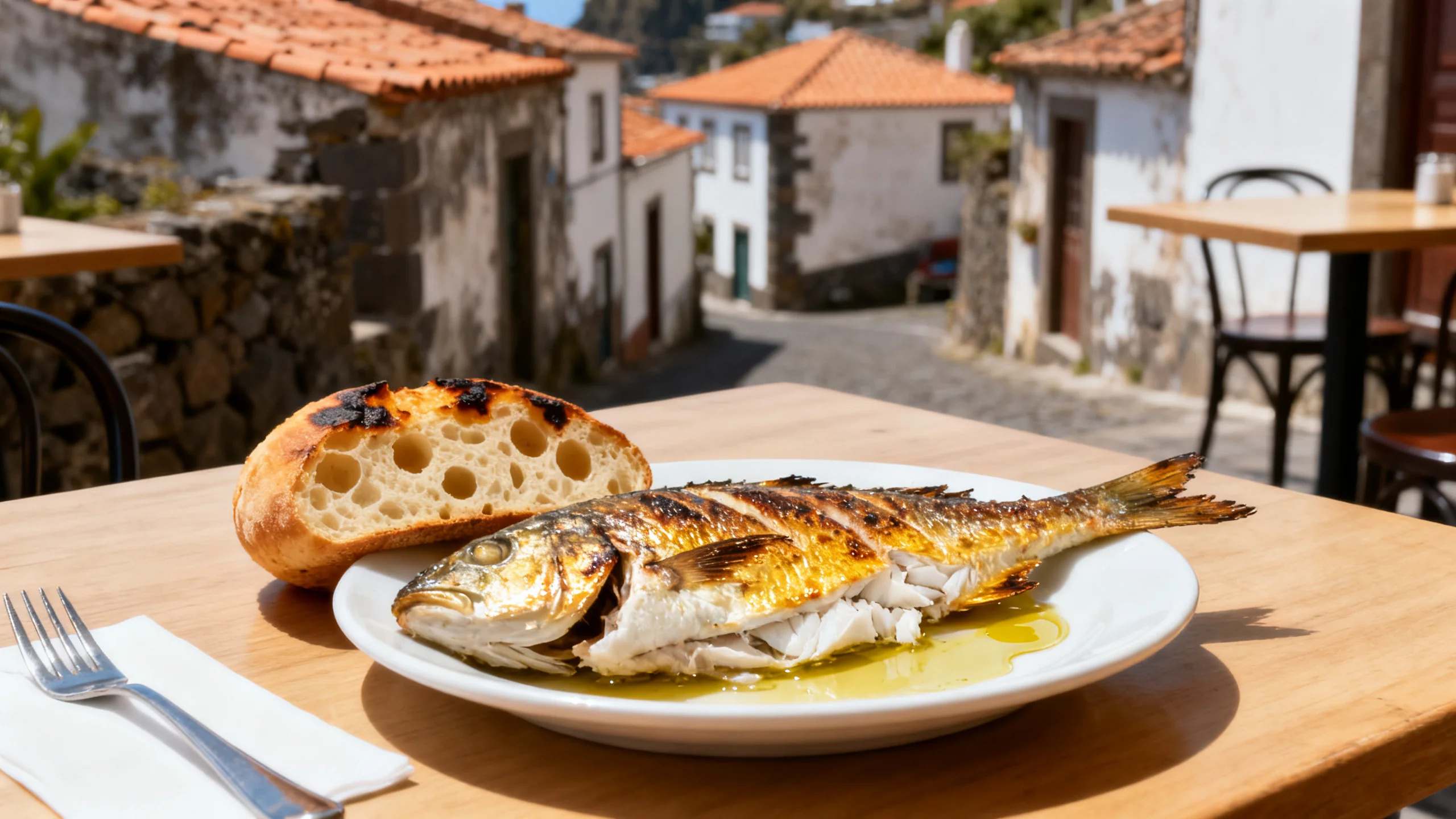
Food is where a little local knowledge saves the most. Many cafés and simple restaurants offer a prato do dia, the dish of the day, often a generous plate of fish or meat for a single modest price, sometimes with soup or coffee included. It is what local workers eat at lunchtime, and it is excellent value.
The contrast is the laminated tourist menu on the busiest squares and the old town’s prime terraces, where the same dishes cost noticeably more for no better quality. The fix is simple: walk a few streets back from the harbour, look for where Madeirans are eating, and ask for the prato do dia. A bakery bolo do caco sandwich, a market picnic and a coffee culture where an espresso costs barely more than a euro all keep the food bill low.
Free things to do
Madeira is generous to the budget traveller because so much of what makes it special costs nothing. The levada walks are free, and they are the island’s signature experience. The coastal and mountain viewpoints are free. Funchal’s Mercado dos Lavradores costs nothing to wander, the seafront promenade is a long free walk, and the Santa Catarina park above the marina is open and free. A week of free walking, with a couple of paid treats, is a real and rewarding way to do Madeira.
Frequently asked questions
Is Madeira expensive to visit?
Not by Western European standards. Flights and a hire car are the main costs, but once on the island the daily spend is modest, with cheap local food and free walking. A budget traveller can do Madeira well on roughly EUR 45 to 70 a day excluding flights and car.
How can I cut the cost of a Madeira trip?
Travel in the shoulder season rather than summer or New Year, hire the car only for the days you drive out, eat the prato do dia at lunch, and build the trip around free levada walks and viewpoints. Those four habits make the largest difference to the final bill.
Do I need a car, or can I save by skipping it?
You can save real money by skipping the car and using buses, since Funchal is walkable and Rodoeste and SAM reach the wider island. The trade-off is timing: rural buses suit reaching towns, not tight hiking schedules. A middle path is to hire a car for just two or three driving days.
What is the prato do dia and why does it matter?
It is the dish of the day, a set plate of fish or meat offered at lunchtime by many simple cafes and restaurants for a single modest price. It is what locals eat, it is good value, and ordering it instead of choosing from a tourist menu on a prime square is the easiest way to eat well for less.
Are Madeira's attractions free?
Many of the best ones are. The levada walks, the viewpoints, the seafront promenade and wandering the Mercado dos Lavradores all cost nothing. The paid attractions, such as the cable car, boat trips and guided activities, are a smaller part of the budget, and you can pick just one or two as treats.