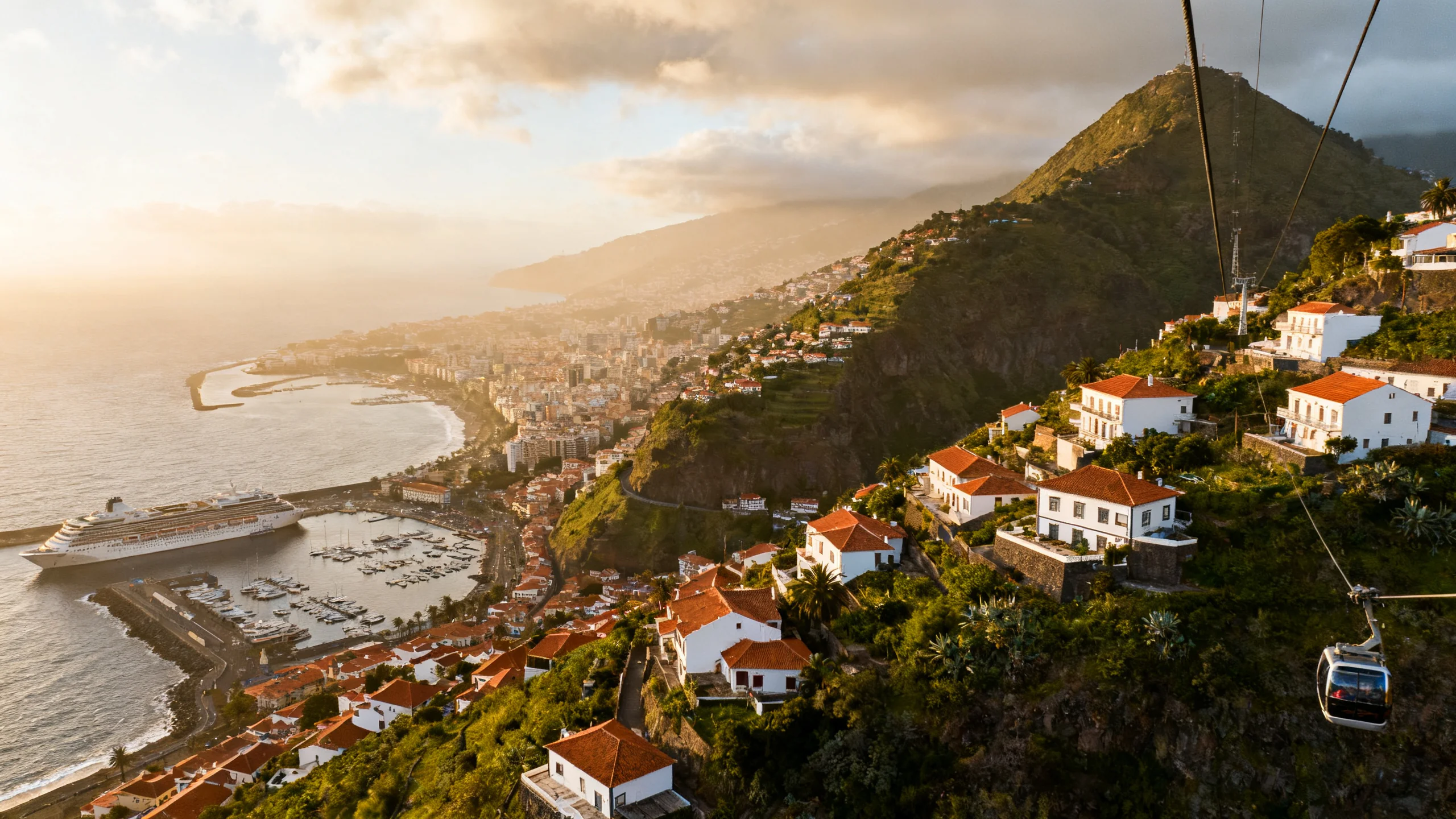
Funchal is where almost every Madeira trip begins. The island capital climbs in a wide amphitheatre above its harbour on the sheltered south coast, and packs the cobbled Zona Velha, the Monte cable car, the Mercado dos Lavradores, and the historic wine lodges into a compact, walkable centre. It holds most of the island's hotels and restaurants, which makes it the natural base for a self-drive trip.
Funchal is a working city as much as a resort, and that is the first thing to get straight about it. Around a third of everyone on Madeira lives here, cruise ships tie up directly below the old town, and the slopes behind the centre are stacked with houses, gardens and the quintas, the grand hillside estates that the wine and embroidery trades paid for. The city spreads across a natural amphitheatre on the sheltered south coast, which is why it catches the sun while cloud often piles up on the peaks behind.
This guide covers what Funchal is good for, the neighbourhoods you will actually use, the sights worth your time, the day trips it puts within reach, where to stay, and how to plan a stay of two to four days.
Why base yourself in Funchal
Most Madeira trips run out of Funchal whether you plan it that way or not. The city holds the large majority of the island’s hotels, restaurants and car-hire desks, the airport is about twenty minutes east, and the south-coast expressway, the Via Rápida (VR1), puts nearly every other region within an hour’s drive. You can keep the same room all week and still reach the mountains, the north coast and the eastern peninsula on day trips.
It also has enough of its own to fill two or three days without ever touching the car. The covered market, the old town, the cathedral, the cable car up to Monte, the wine lodges and a seafront promenade you can walk for kilometres are all in or near the centre. For a first trip the honest recommendation is simple: base in Funchal, hire a car for the days you head out, and leave it in the hotel garage the rest of the time. The centre is walkable, and parking in it is not worth the fight.
Getting your bearings
Funchal is built on a slope, and that steepness shapes everything. A handful of areas cover what visitors need.
The Sé and the centre. The historic core sits around the Sé, the early-16th-century cathedral with its carved cedar ceiling. Avenida Arriaga and the streets behind it hold the main shops, the municipal gardens, the tourist office and Blandy’s wine lodge. This is the flattest part of the city, which on these gradients counts for a lot.
Zona Velha, the old town. East of the centre, between the market and the Forte de São Tiago, this is the oldest quarter: narrow cobbled lanes, the Santa Maria Maior church, and a solid run of restaurant terraces. The doors along Rua de Santa Maria were painted by local artists for the Arte de Portas Abertas project, which keeps the street from feeling like a stage set even though it is firmly on the tourist trail. The Monte cable car’s lower station is here.
Lido and São Martinho. West of the centre, this is the modern hotel district: most of the larger sea-view hotels, plus the bathing complexes (the lidos) that stand in for the sand beach Funchal does not have. The seafront promenade strings it all together.
Monte. High above the city, reached by cable car, with its pilgrimage church, its tropical garden and the start of the wicker-toboggan run. Noticeably cooler and greener than the coast.
Top things to do in Funchal
Mercado dos Lavradores. The covered market, a 1940 Art Deco building tiled with painted azulejo panels, is best early. Growers from the hills lay out custard apples, passion fruit, anona and the small sweet banana the island grows; the fish hall downstairs sells espada, the long black scabbard fish, landed that morning. Vendors on the upper level will press tropical-fruit samples on you and then quote eye-watering prices. Taste, enjoy, and feel free to walk away.
The Monte cable car and the toboggan. The Teleférico do Funchal lifts you out of the old town to Monte in about fifteen minutes, the city and harbour dropping away below. At the top are the church of Nossa Senhora do Monte and the Monte Palace tropical garden. The traditional way down is the carro de cesto: a wicker sledge on greased wooden runners, steered by two carreiros in straw hats and white clothes, that slides about two kilometres down the public road to Livramento. It is short, touristy and good fun. It does not return to the city, so you finish with a brief taxi ride.
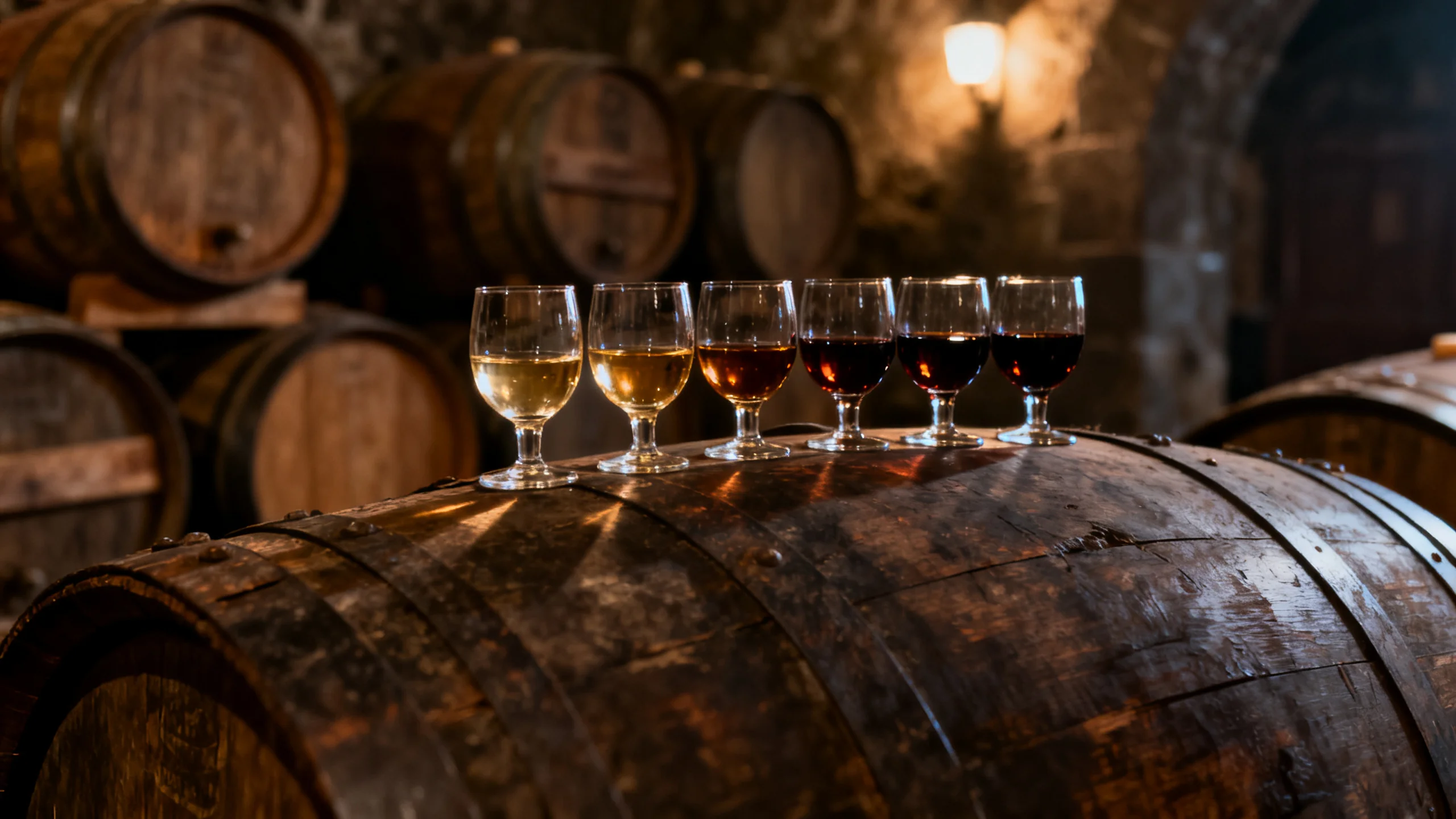
The wine lodges. Madeira wine is fortified and deliberately heated as it ages, which gives it a near-indestructible character: an opened bottle keeps for months. Blandy’s Wine Lodge, in the old São Francisco friary on Avenida Arriaga, runs the most polished tours and tastings; Pereira d’Oliveira in the old town is smaller and more informal. A tasting flight runs through the styles, from bone-dry Sercial to sweet Malmsey.
The gardens. Funchal is a city of gardens. The Monte Palace garden pairs subtropical planting with imported azulejos and koi ponds; the Jardim Botânico, on its own hillside east of Monte and reached by a second, separate cable car, holds the island’s plant collections in formal terraces. The Santa Catarina park above the marina is free and good for an hour in the sun.
The old town and the seafront. The Zona Velha is for slow wandering: the painted doors, the small Barreirinha bathing spot, the squat yellow Forte de São Tiago. From there the promenade runs west along the marina and Avenida do Mar, past the CR7 museum dedicated to Cristiano Ronaldo (Madeira’s most famous export), and on toward the Lido. It is a flat, walkable seam through an otherwise vertical city.
Day trips from Funchal
Funchal’s real value is as a hub. Several of Madeira’s best-known sights are short drives away:
- Câmara de Lobos, fifteen minutes west, is the fishing village where Winston Churchill set up his easel; it is also the spiritual home of poncha, the island’s sugarcane-spirit, honey and citrus drink.
- Cabo Girão, a little further on, has a glass-floored skywalk projecting over a sea cliff that drops close to 580 metres, among the highest in Europe.
- The central mountains are about 45 minutes up the hill: Pico do Arieiro for sunrise, the Pico Ruivo ridge trail, the laurel forest at Ribeiro Frio.
- The Ponta de São Lourenço peninsula in the east and the natural sea pools of Porto Moniz on the north coast are both inside roughly an hour.
A 5-day Madeira itinerary shows how to thread these together from a single Funchal base.
Where to stay
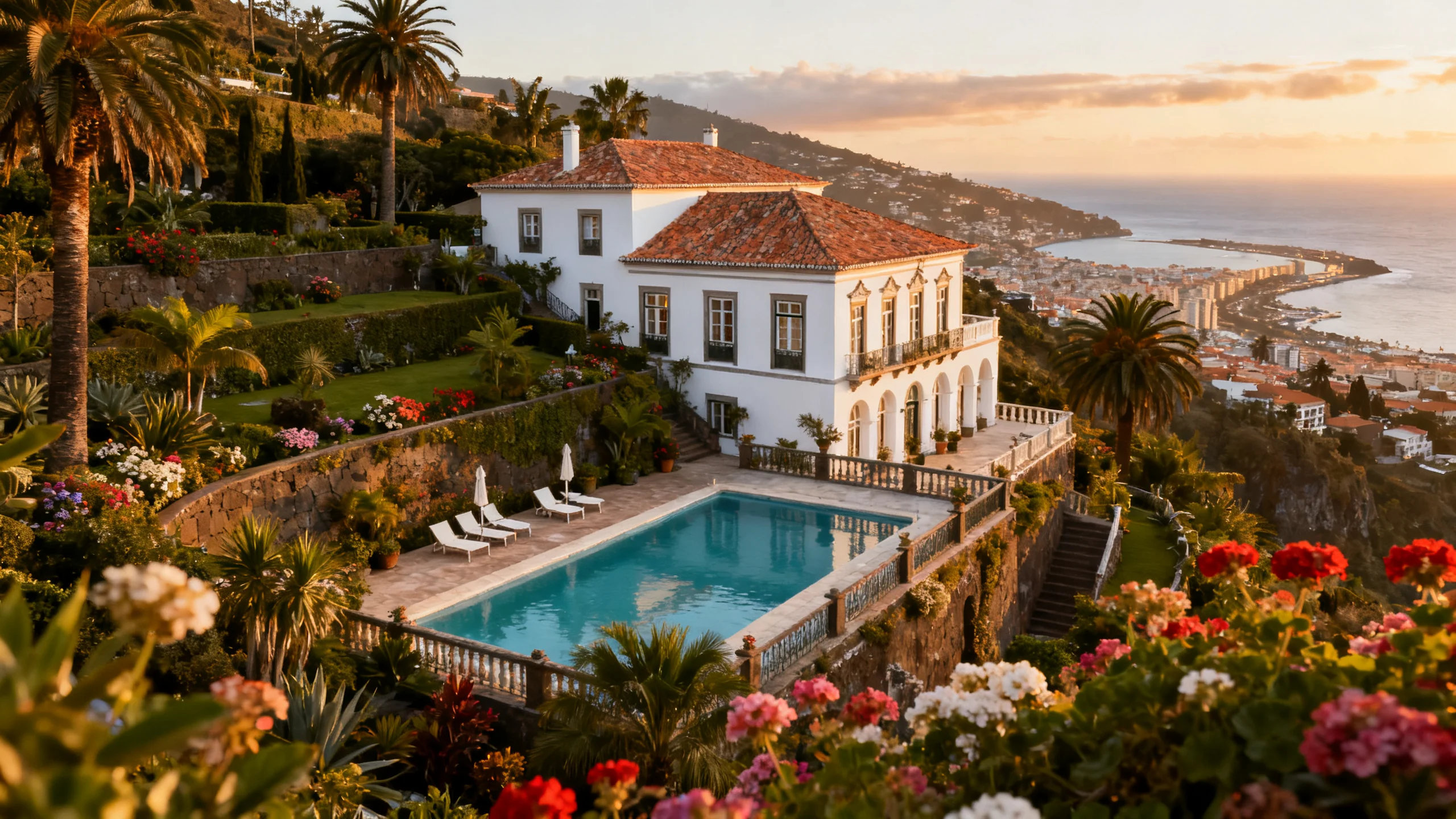
Funchal’s accommodation splits roughly three ways. The Lido and São Martinho district has the big sea-view hotels and the bathing complexes; it is convenient and comfortable, if a little anonymous. The old town and centre put you among the restaurants and within walking distance of the market and the cable car, in smaller and often more characterful places. The hillside quintas are converted estate houses with terraced gardens. They are the most distinctive option, quiet and panoramic, but you will lean on taxis or the car to get up and down.
The dedicated where to stay in Funchal guide breaks this down by area, budget and the kind of trip you are planning.
Getting to Funchal and getting around
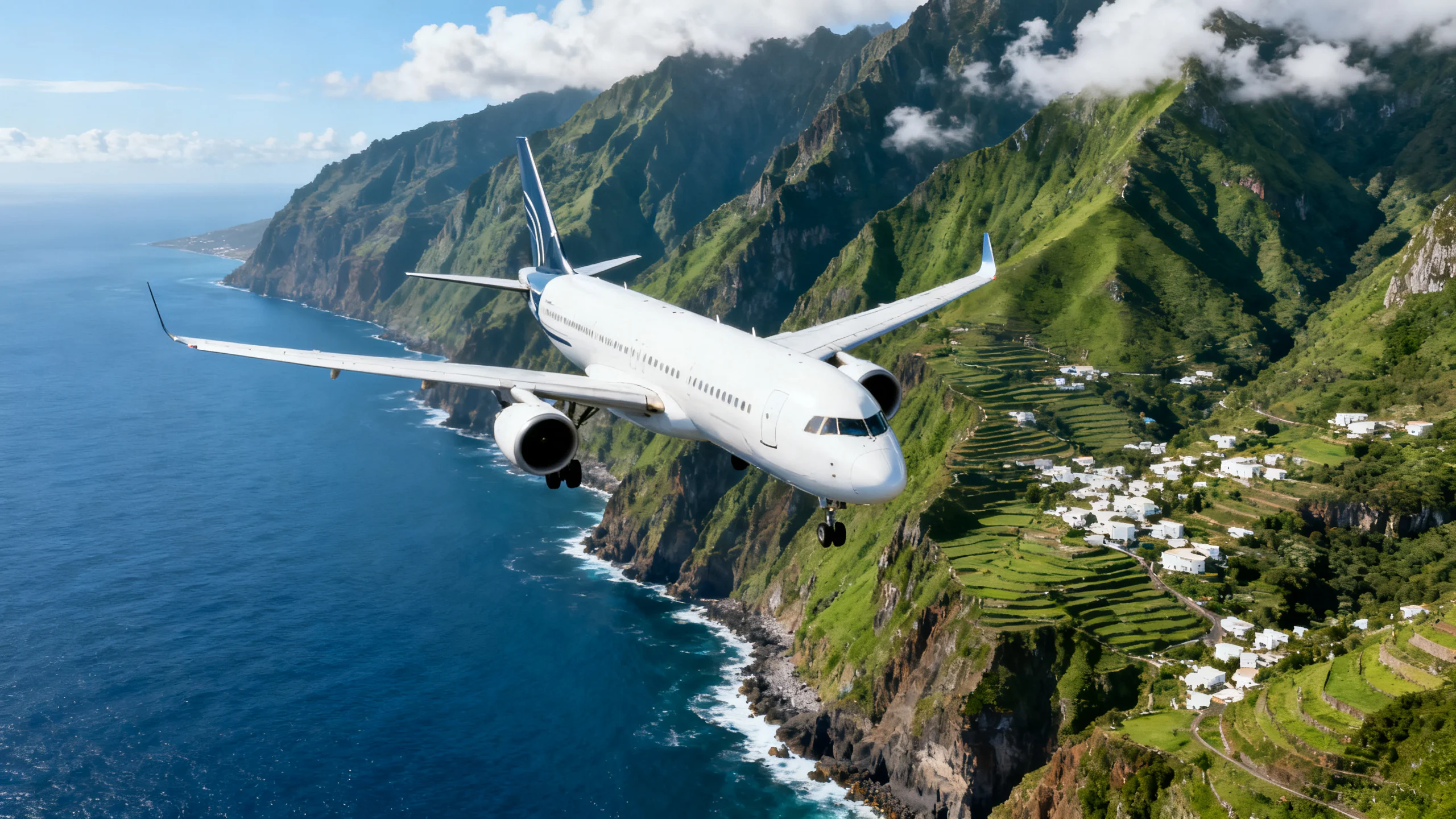
Madeira’s airport (FNC) sits at Santa Cruz, about 18 kilometres east of the city, roughly twenty minutes by the expressway. It takes direct flights from Lisbon and Porto and, seasonally, from many European cities; the getting to Madeira guide covers the routes and the airport’s famously exposed clifftop runway. An aerobus, scheduled transfers and taxis all link the airport with the city centre.
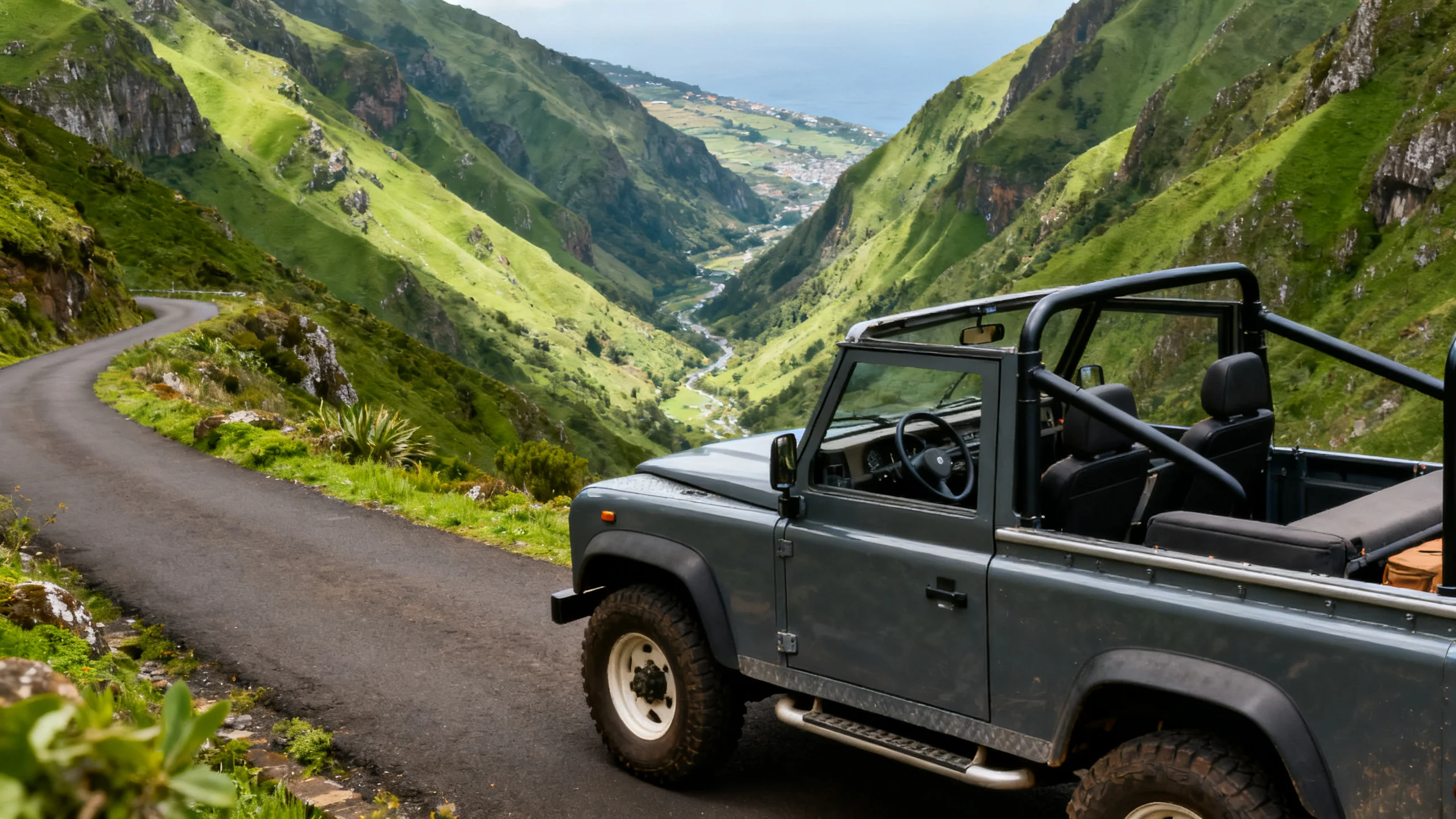
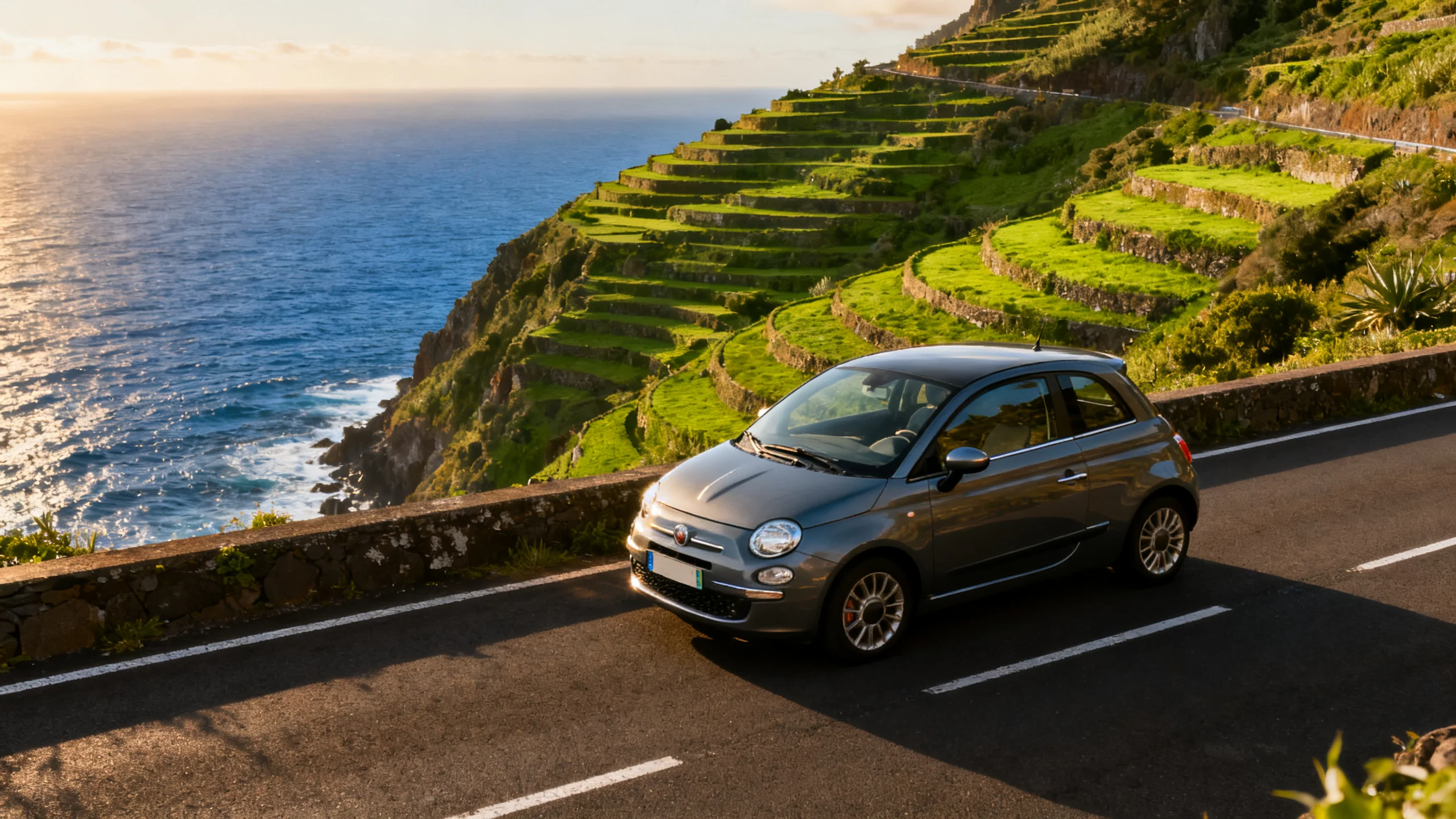
In Funchal itself you do not need a car. The centre, old town and seafront are walkable, if hilly, and the orange Horários do Funchal buses cover the rest. For the day trips, hire a car. It is worth collecting it on the morning of your first drive rather than at the airport, so you are not paying for a car that sits in a garage. Driving is on the right; the expressways are excellent and the older mountain roads steep and narrow.
Best time to visit
Funchal has no off-season in the way northern European cities do. Winter days still reach the high teens, and the south coast stays comparatively dry and bright.
- April–June: warm, long days, the hillsides in flower. Late spring brings the Flower Festival (Festa da Flor), with its flower-carpet procession through the centre.
- July–August: the warmest sea and the busiest streets. The Madeira Wine Festival falls at the end of August. Hotels are at their priciest.
- September–October: still warm, the sea still swimmable, the crowds easing. A strong all-round pick.
- November–March: cooler and cloudier but still mild. The city’s New Year fireworks are a genuine spectacle, once a Guinness record-holder, and the build-up to Christmas fills the centre with lights. Both push hotel prices sharply up for those specific dates.
Practical tips
The currency is the euro. Portuguese is the official language; English is widely spoken across Funchal’s tourism trade. Tap water is safe to drink. Plugs are the European Schuko type (C and F), 230 V.
Funchal has no sand beach in the centre. Swimming is at the lidos (sea-access bathing platforms and saltwater pools such as the Lido, Ponta Gorda and Doca do Cavacas) and at the pebble beach of Praia Formosa to the west. Travellers expecting a classic resort beach should know this in advance; for golden sand, the place to go is Porto Santo.
Tipping is modest. Rounding up, or leaving five to ten per cent for good restaurant service, is plenty.
Frequently asked questions
How many days should I spend in Funchal?
Two to three nights covers the city itself comfortably. But because Funchal works so well as an island-wide base, many visitors stay four or more nights here and treat the rest of Madeira as day trips rather than relocating.
Does Funchal have a beach?
Not a sandy one in the centre. The city swims at lidos (saltwater pools and sea-access platforms) and at the pebble beach of Praia Formosa. For a long golden-sand beach you need the sister island of Porto Santo, a ferry or short flight away.
Do I need a car if I'm staying in Funchal?
Not for the city: it is walkable and well served by buses. You will want a car for day trips into the mountains and along the coast, but many visitors hire one only for the days they actually drive out, since central parking is scarce and expensive.
Is the Monte toboggan ride worth doing?
It is short, about ten minutes, and clearly a tourist attraction, but it is also good fun and unique to Madeira. Note that it ends at Livramento, partway down the hill rather than back in the city, so budget a taxi for the last stretch.
Is Funchal a good base for the whole island?
Yes, for most trips. The expressway network reaches nearly every region within an hour, so a single Funchal base spares you repeated packing. The main exception is hikers who want dawn starts in the central mountains, who may prefer a night or two closer to the peaks.