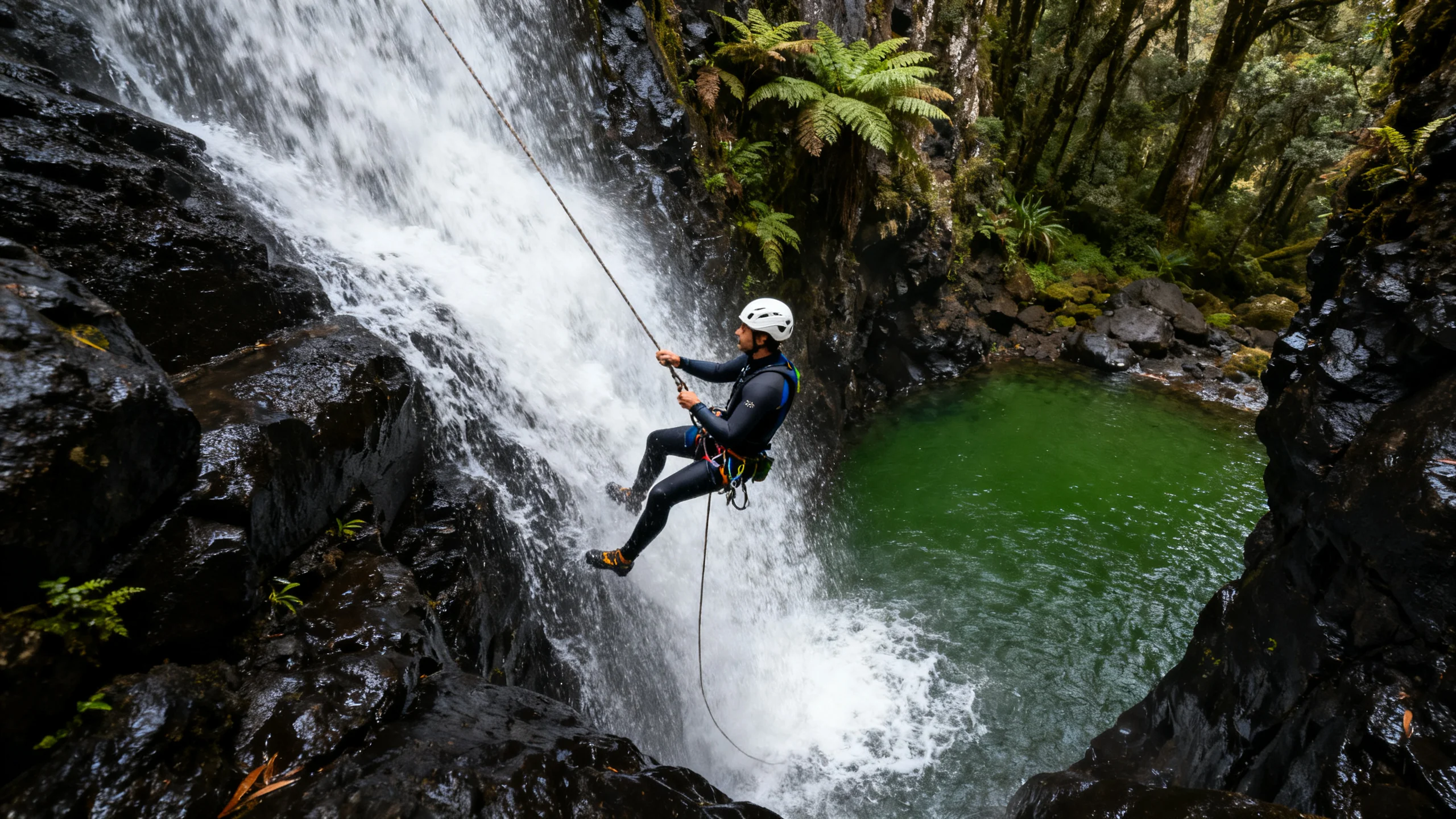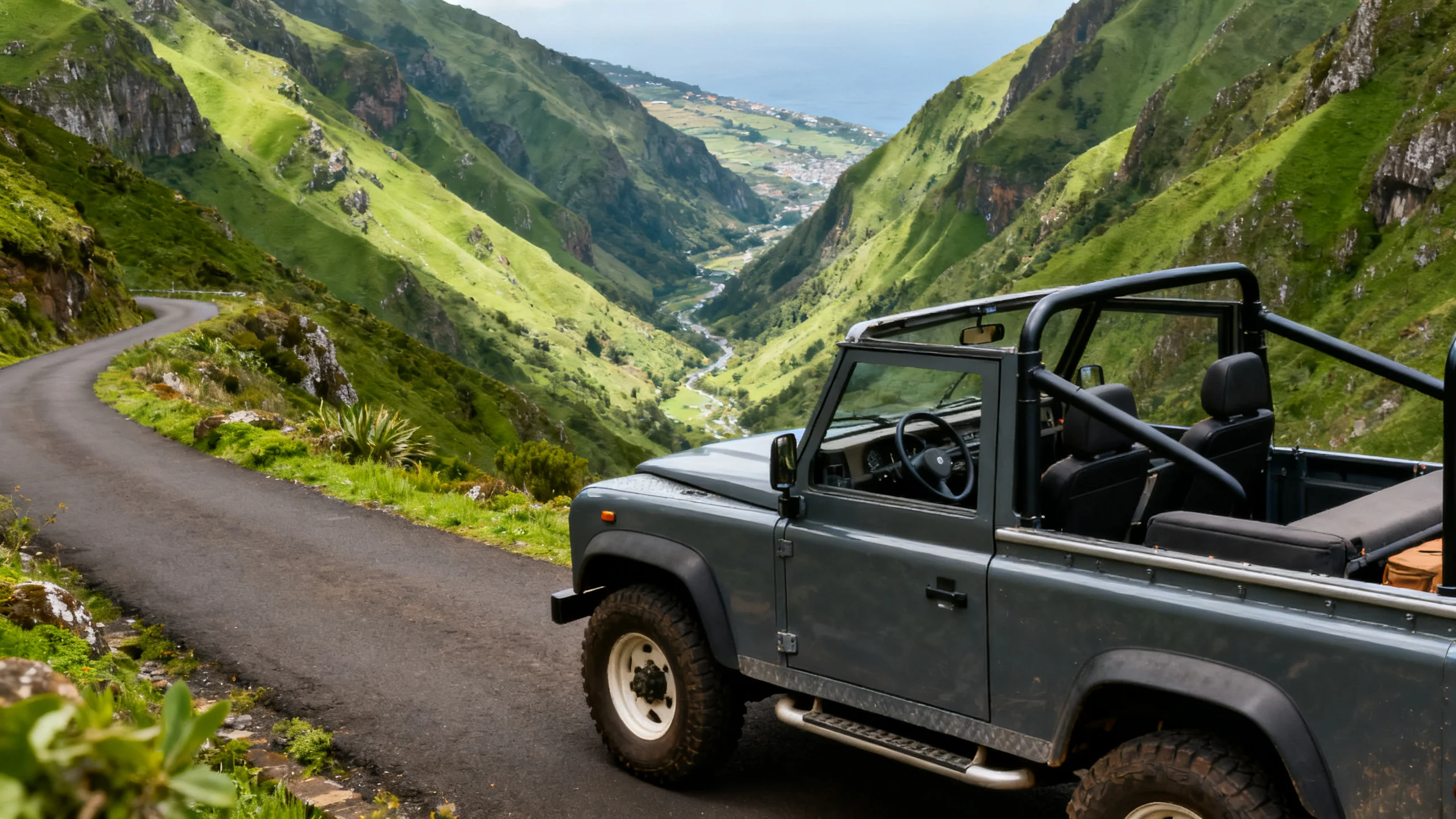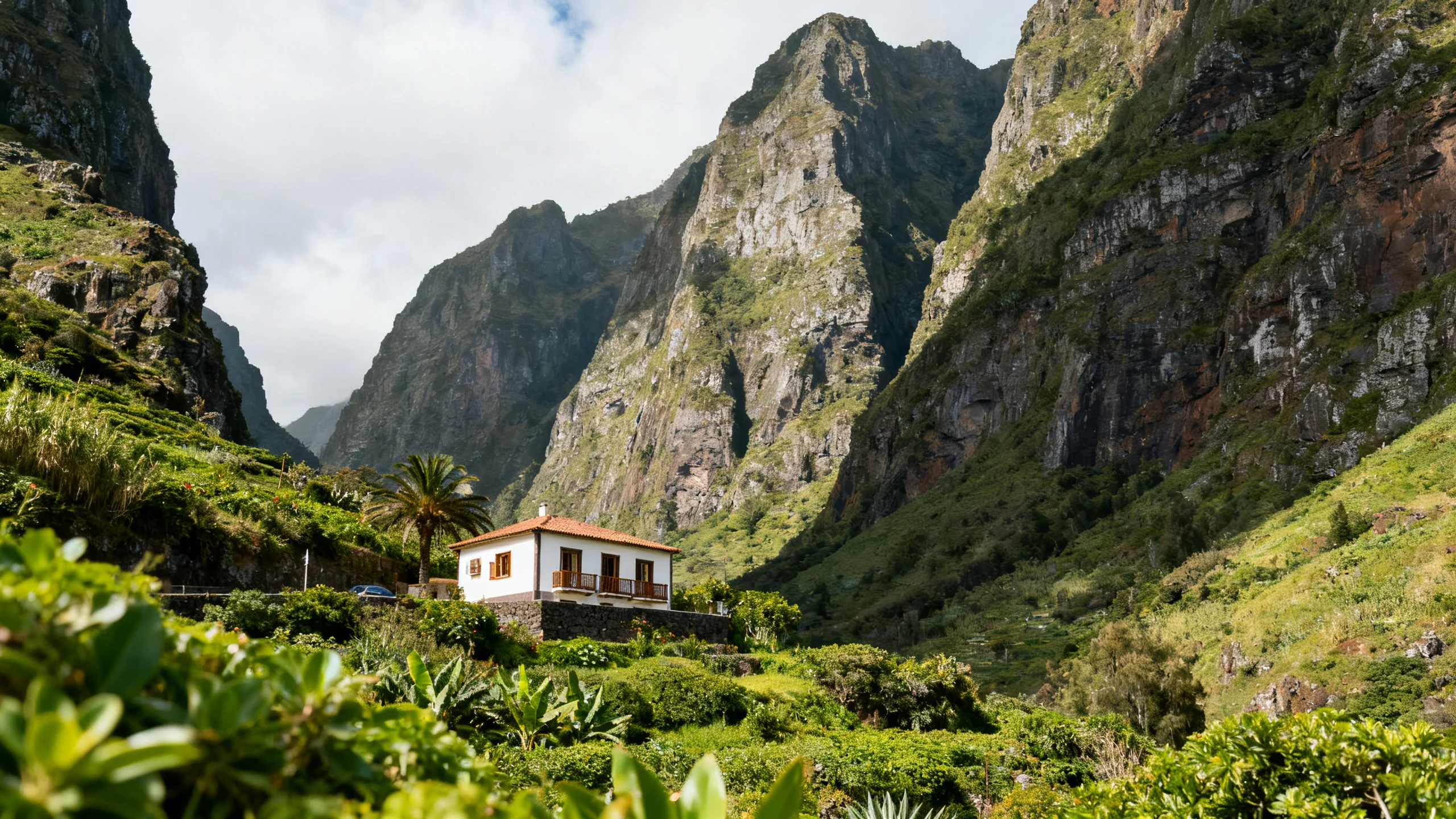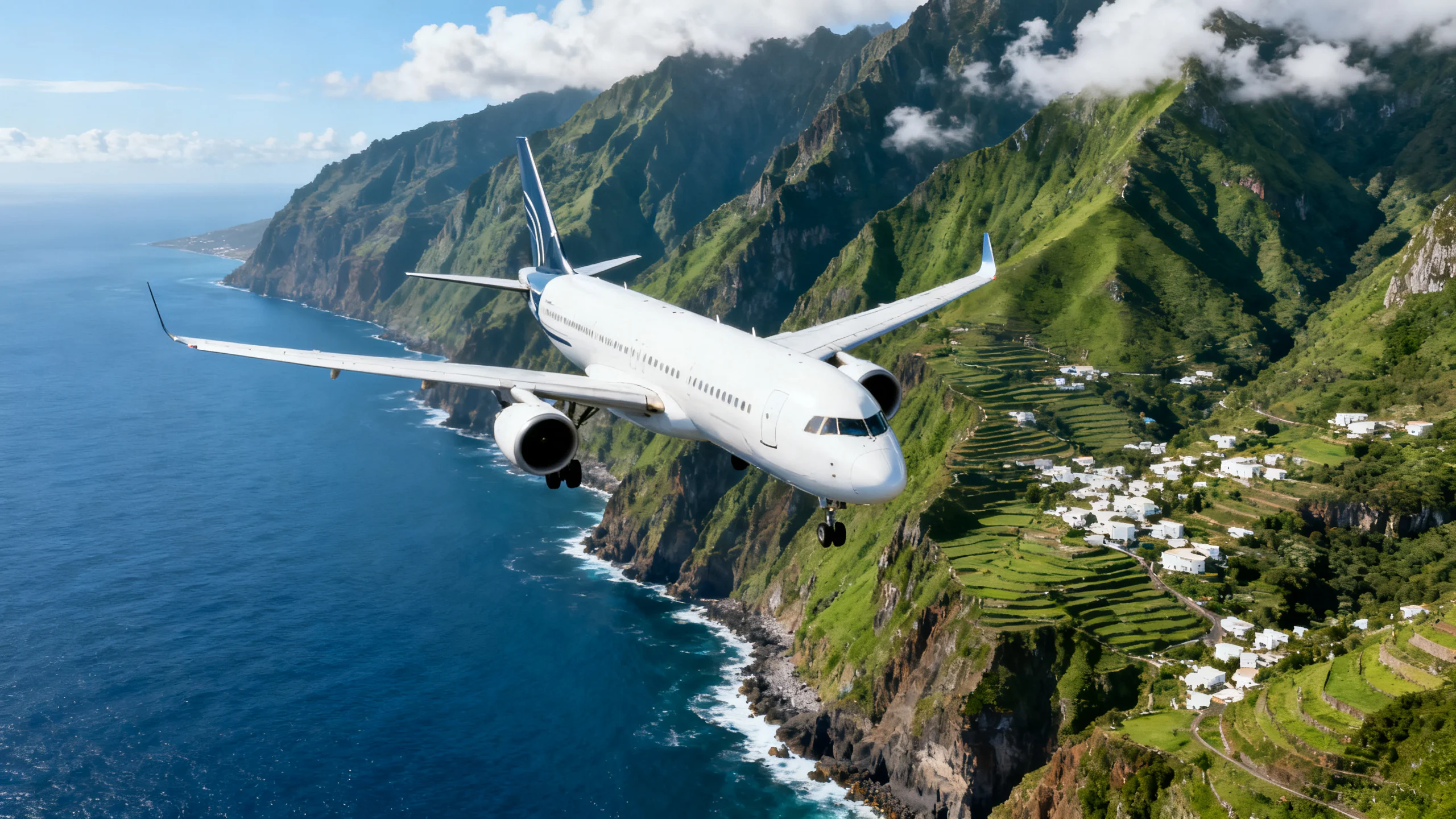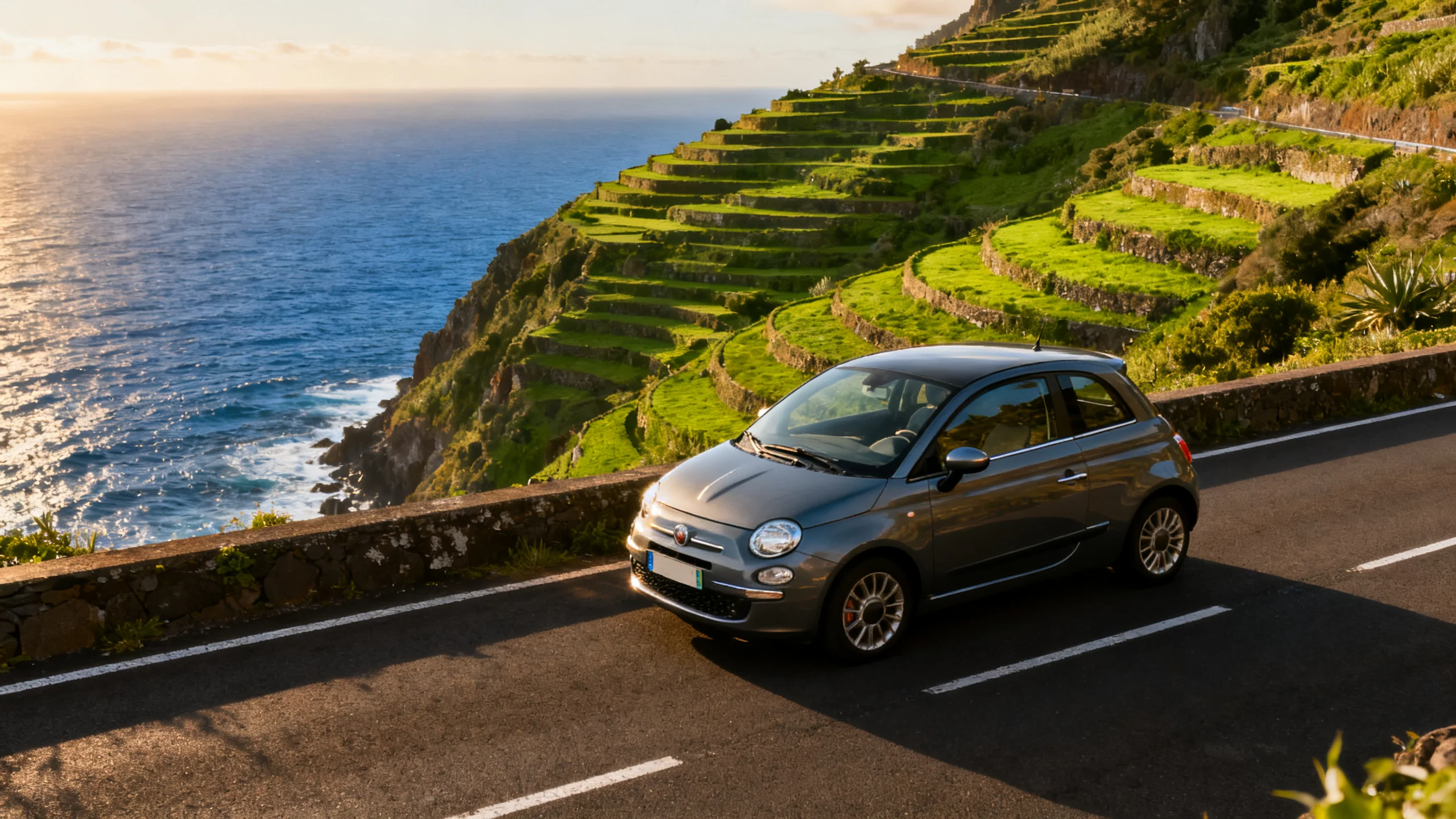
The north coast is the wild, wet side of Madeira. Atlantic swell hits cliffs that drop almost vertically into the sea, the valleys are deep and intensely green, and the old coast road clings to ledges blasted out of the rock. It is less developed than the south and all the better for it: São Vicente, Porto Moniz and Santana are the three anchors of a region built for slow driving and big scenery.
The north coast feels like a different island from sunny Funchal, and the drive over makes the point. You climb through tunnels into the cloud and come out above a coast of near-vertical cliffs, deep green valleys and waterfalls that streak the rock after rain. The Atlantic arrives here with nothing to slow it, the light is softer, and the three towns that anchor the region, São Vicente, Porto Moniz and Santana, are quieter and far less built-up than anything on the south coast.
This guide covers what the north is good for, the sights worth the drive, the few good places to stay, and how much time to give it.
Should you make time for the north
Yes, but know what it is. The north is the wrong choice for guaranteed sun or a beach holiday. Cloud gathers against the high ground, and the weather is wetter than the south. What it has instead is Madeira’s most dramatic coastal scenery, its best natural sea-pool swimming, and a slower, much less touristy pace.
Most visitors take in the north as a long day-loop from Funchal, and that works well. But the region rewards an overnight. Stay in São Vicente or near Santana and you can drive the old cliff roads early, before the tour coaches arrive, when the tunnels and waterfalls have the coast to themselves.
Getting your bearings
The north coast runs roughly west to east. Porto Moniz sits at the north-western tip, where the lava pools are. São Vicente is the midpoint, set back in the mouth of a deep valley and the easiest place to break a journey. Santana lies further east, known for its thatched houses and as the gateway to the high laurel forest. Between and behind them, ridges clad in laurisilva catch the cloud, and the land falls to the sea in a near-continuous wall of cliff.
Two kinds of road serve the region. Modern expressways with long tunnels (the VE routes) connect each town to Funchal in well under an hour. The older coast roads are slower, narrower and far more scenic. They are the reason to come.
Top things to do on the north coast
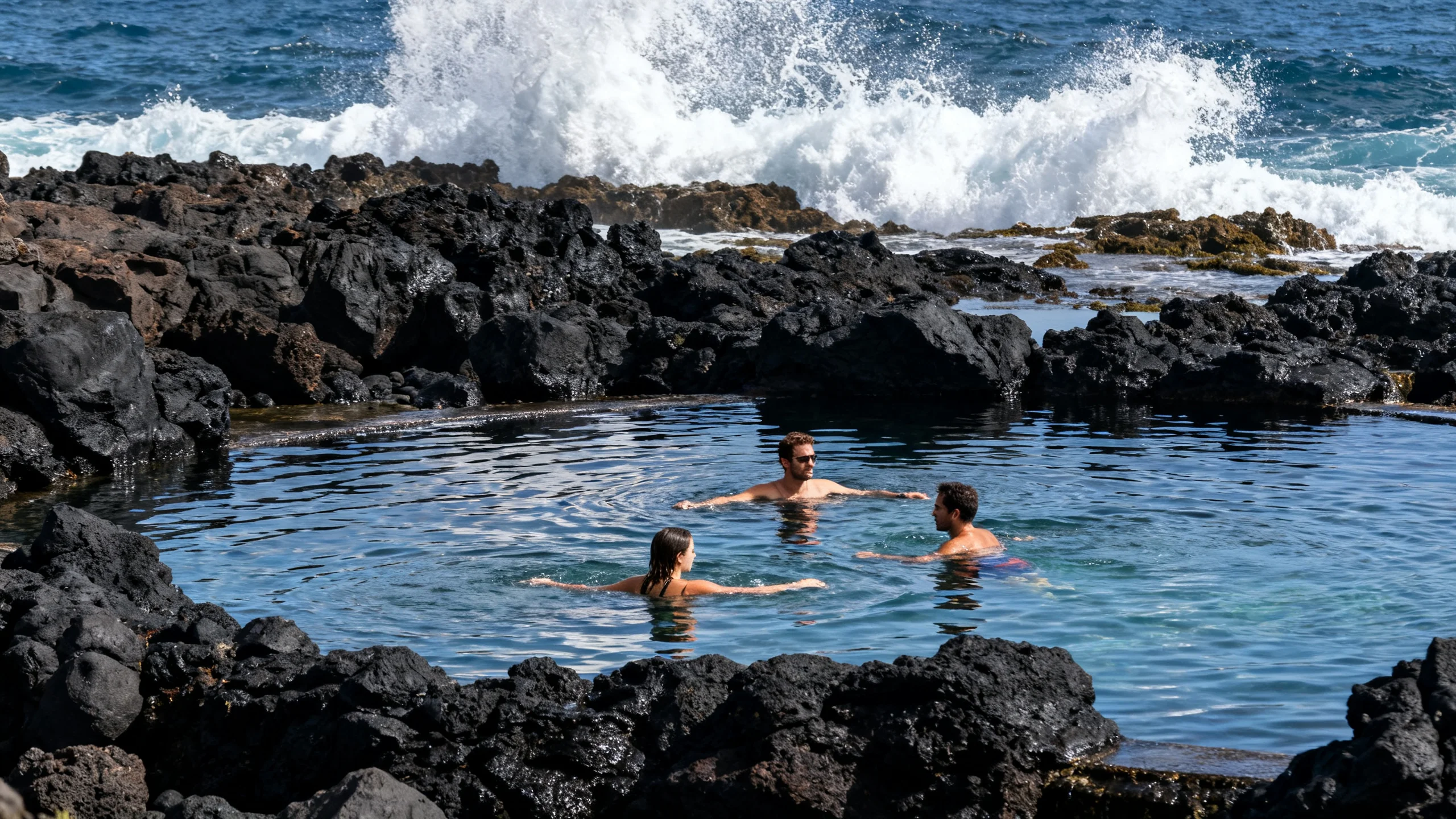
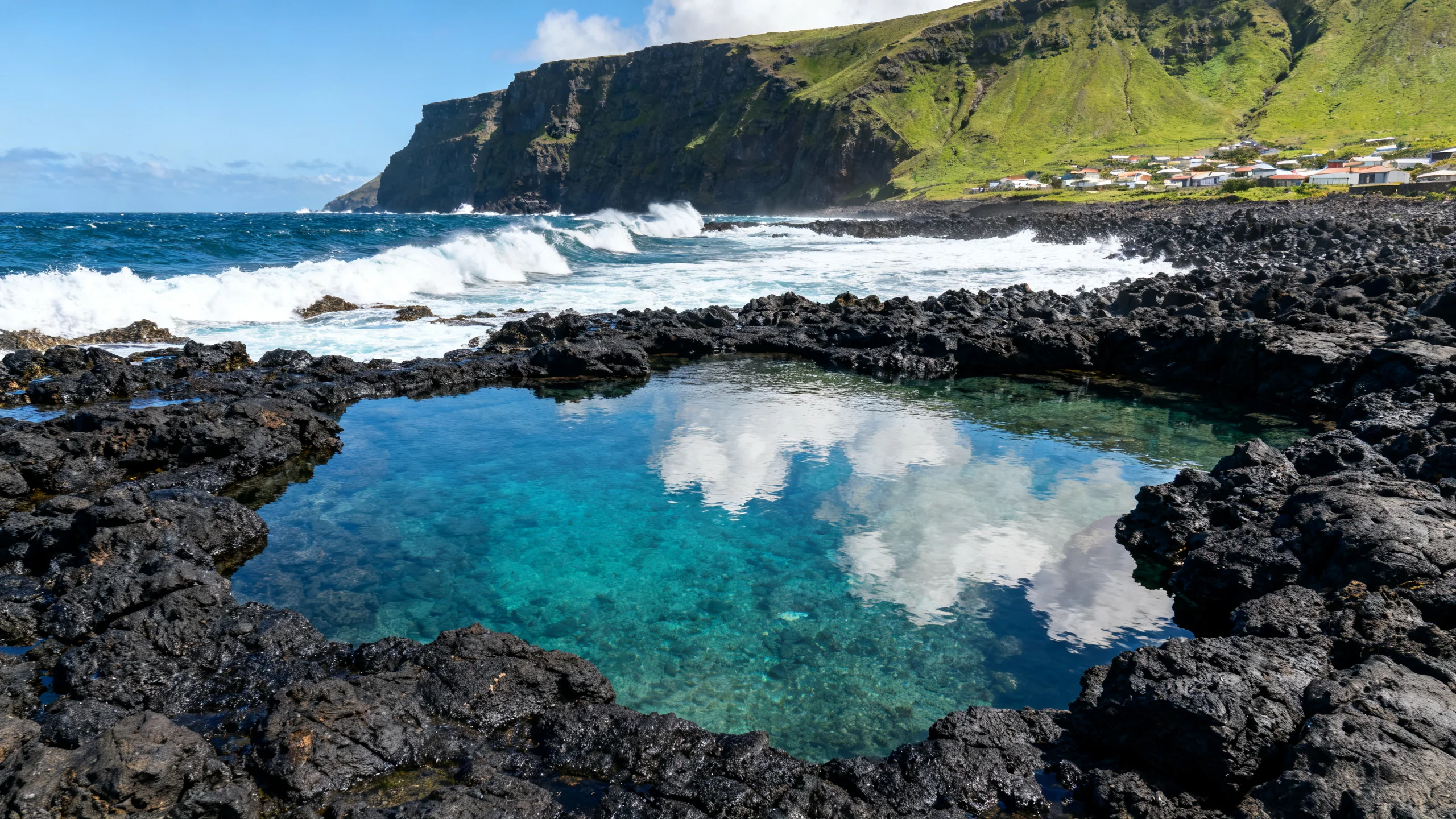
Porto Moniz natural pools. The signature image of the north: black volcanic rock shaped by old lava flows into a set of pools fed and refreshed by the ocean. There are two. The managed complex has an entry fee, lifeguards, changing rooms and a café; the wilder free section nearby is rougher and more exposed. Both are worth a look. Swimming depends on the swell: calm days are sublime, rough days close the pools entirely.
The old coast road and Seixal. Before the tunnels, the only way along this coast was a road cut into the cliff face, and stretches of it survive as scenic detours. The drive near Seixal is the highlight: a black-sand beach, vineyards clinging to the cliffs, and the spot where the old road runs right beneath a waterfall. Take it slowly: single lanes, blind bends, and the occasional rockfall.
Santana’s thatched houses. Santana is known for its casas de colmo: small, steep-roofed A-frame houses, thatched to the ground and painted in red, white and blue. A cluster is preserved as a display beside the town hall. The wider Santana municipality is a UNESCO Biosphere Reserve, and the town is the road-head for the high country behind it.
São Vicente and its caves. The town sits neatly around a baroque church at the foot of its valley, a good lunch stop. Just inland, the Grutas de São Vicente are a set of volcanic lava tubes open to visitors, paired with a small volcanism centre that explains how the island was built.
The Caldeirão Verde levada walk. From Queimadas, above Santana, a level levada path threads through the laurel forest to a waterfall dropping into a green pool. It is one of the island’s great walks, on the kind of irrigation channel that laces all of Madeira. The forest it runs through is the UNESCO-listed laurisilva.
Where to stay
Most visitors do not stay on the north coast at all; they day-trip from Funchal. If you do want a night here, São Vicente is the most practical base: central on the coast, with a tidy town centre and a handful of hotels and guesthouses. Santana has rural lodges and quintas and suits walkers heading for the laurel forest. Porto Moniz has a few hotels right by the pools, convenient for an early swim and quiet once the day-trippers have gone.
Getting there and around
A car is essential. The north’s public transport is thin, and the scenery is the point. From Funchal the tunnelled expressways reach São Vicente in about 50 minutes, Santana in around 40, and Porto Moniz in roughly an hour. For the experience, swap the tunnels for the old coast road on at least one leg, allowing far more time than the distance suggests.
A natural loop from Funchal: out over the mountains via the Encumeada pass to São Vicente, west along the coast to Porto Moniz, then back south. Reverse it, or extend east to Santana, depending on where you want the light.
How much time to give it
One full day covers the region as a loop from the south. An overnight in São Vicente or Santana buys you the old coast roads in early light and, if you want it, a forest levada walk above Santana. The north also pairs naturally with the central mountains; the road over the top connects them.
Best time to visit
- May–September: the warmest, driest months and the only reliable window for swimming in the Porto Moniz pools. Even then, the north sees more cloud than the south.
- October–April: greener still, the waterfalls at their fullest, but cooler and wetter, and the sea often too rough for the pools. A scenic drive rather than a swimming trip.
After heavy rain the cliffs run with temporary waterfalls and the valleys look their best. The same rain brings the risk of rockfalls on the older roads, though, so check conditions locally.
Frequently asked questions
Is the north coast worth it on a short trip?
Yes. Even on a four- or five-day trip the north earns a day, ideally combined with the central mountains, since the road over the top connects them. It is the most scenically different part of the island from Funchal and the south.
Can you swim in the Porto Moniz pools?
Yes, in calm conditions, mainly from late spring to early autumn. The pools are fed by the ocean, so swimming depends entirely on the swell; when the Atlantic is rough they close. The managed complex has lifeguards and facilities; the free section is wilder and unsupervised.
Do I need a car for the north coast?
Effectively yes. Buses serve the main towns but infrequently, and the appeal of the north is the freedom to take the old coast roads and stop at viewpoints. Without a car, an organised day tour from Funchal is the practical alternative.
Is the north always cloudy and wet?
Not always, but more often than the south. The high mountains trap moist air against the north coast, so it sees more cloud and rain year-round. This is also why it is so green. Pick the clearest day of your trip for the north and you can get bright skies. Just keep the plan flexible.