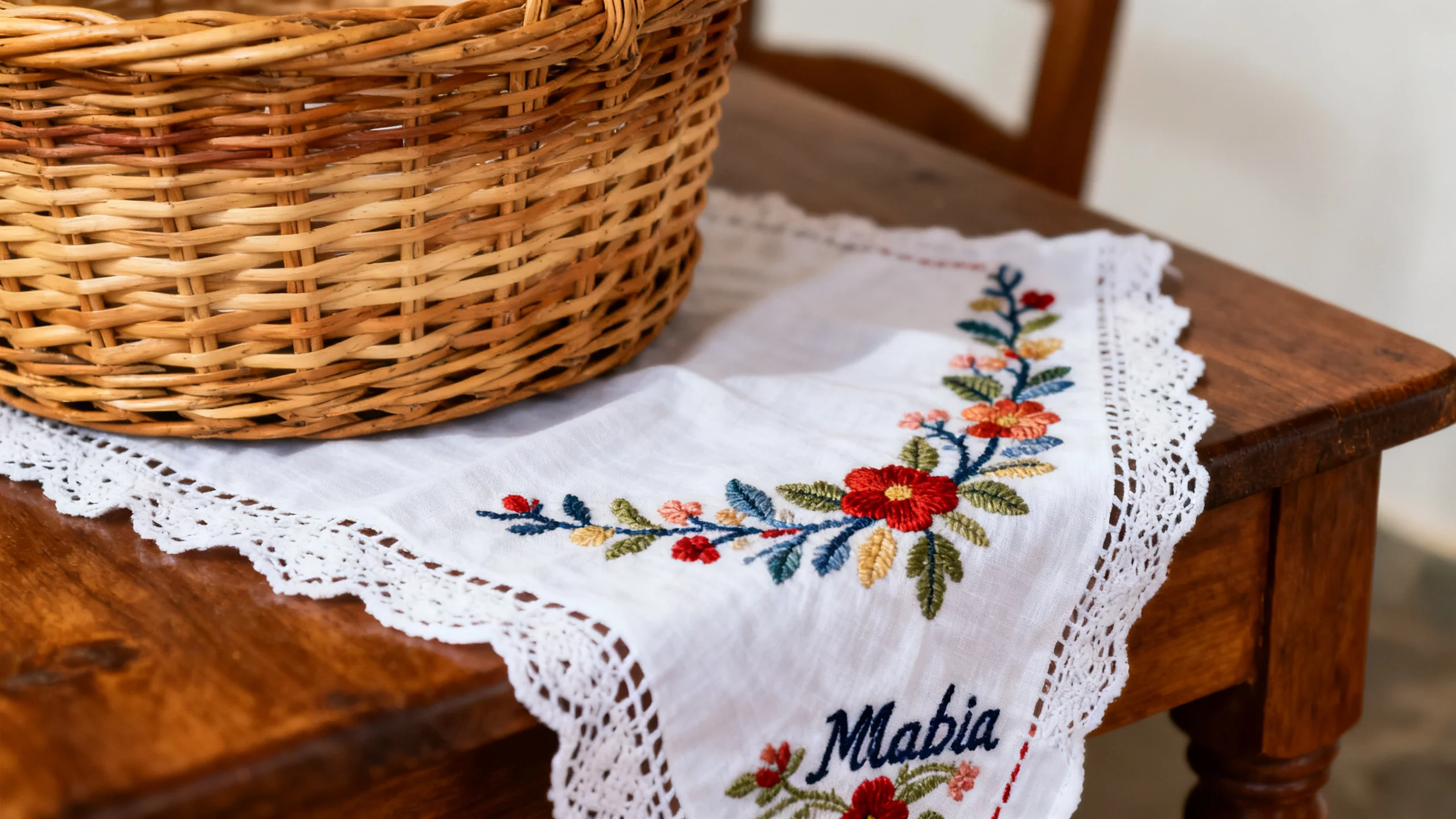
Bordado Madeira embroidery and Camacha wickerwork: the history of two island crafts, the women's home-work economy behind them, and how to spot genuine certified pieces.
Madeira has two craft traditions serious enough to carry the island’s name and an official mark of authenticity: hand embroidery, and willow wickerwork. Both grew out of the same need, a small island with limited land looking for ways to earn, and both became real industries that shaped the lives of thousands of families, especially women.
They are not folklore put on for visitors. Bordado Madeira embroidery was for generations a genuine pillar of the island’s economy, and the wicker baskets of Camacha were everyday working objects before they were souvenirs. Both crafts still exist, both are now under pressure from cheap imports, and both reward a buyer who knows what to look for.
This guide covers the history of the two crafts, the home-work economy behind the embroidery, and a practical buyer’s guide to telling the genuine article from the imitation.
Bordado Madeira: the embroidery
Madeira embroidery, Bordado Madeira, is fine hand embroidery worked on linen, cotton or organdie: tablecloths, napkins, blouses, handkerchiefs and bed linen, worked in white or pale thread with delicate openwork, cutwork and floral motifs.
The industry dates to the middle of the 19th century. It is usually traced to the 1850s and to Englishwomen connected to the merchant community, who saw that the fine needlework Madeiran women already did could be turned into a product for export. From there it grew quickly. By the late 19th and early 20th centuries, Madeira embroidery was being sold across Europe and to America, and it became one of the island’s main sources of income alongside wine.
A women’s home-work economy
The defining feature of the embroidery industry is that the work was done at home, by women, across the villages of the island.
The system worked like this: firms in Funchal designed the pieces, prepared and stamped the linen, and distributed it through agents to women in the rural communities. The women embroidered the pieces in their own homes, fitting the work around farming and family, and returned them to be finished, washed and sold. Tens of thousands of women, bordadeiras, worked this way at the industry’s height.
For many Madeiran families this home embroidery was an essential income, and sometimes the main one, in a place with little other paid work for women. It is a real and important part of the island’s social history, and it is why a piece of genuine Madeira embroidery represents many hours of skilled hand labour.
Camacha wickerwork
Madeira’s other signature craft is vimes, willow wickerwork, and its capital is the village of Camacha in the hills above Funchal.
Willow is grown in damp ground, cut, boiled, stripped and dried, then woven by hand into baskets, furniture, trays and decorative objects. Wickerwork on Madeira also dates to the 19th century as an organised trade, and Camacha became its centre, with much of the village historically involved in growing the willow or weaving it. The famous wicker toboggan, the carro de cesto that slides down the road from Monte, is itself a product of this craft.
Like the embroidery, wickerwork was a working trade before it was a tourist one. The baskets were everyday tools, and the weaving was a household skill. Camacha remains the place to see and buy it, and to watch it being made.
A buyer’s guide: spotting the genuine article
Both crafts are now competing against cheap machine-made and imported imitations, often sold to visitors as the real thing. If you want a genuine piece, a few checks help.
Look for the certification mark. Genuine Madeira embroidery is certified and carries a numbered lead seal and a hologram or guarantee label from the regional craft authority (IBTAM, the island’s embroidery, tapestry and handicraft institute). The seal is the single clearest sign of authenticity. No seal, no guarantee.
Examine the back. Hand embroidery looks neat and considered on the reverse, not identical to the front but clean, with no machine-stitch uniformity and no loose mass of threads. Machine work and the back of a printed imitation give themselves away.
Be realistic about price. Genuine hand embroidery is expensive because it is many hours of skilled handwork. A large embroidered tablecloth sold cheaply is almost certainly not hand-worked on Madeira. If the price seems too good for the size and detail, it is.
Buy from the right places. Established embroidery houses in Funchal, and the wicker workshops and cooperatives of Camacha, are the reliable sources. A genuine shop will be happy to show you the certification and explain the work; a stall selling vague “local craft” may not.
Frequently asked questions
What is Madeira embroidery?
Bordado Madeira is fine hand embroidery worked on linen and cotton: tablecloths, napkins, blouses and bed linen, with delicate openwork and floral motifs. It became an organised industry in the 1850s and was for generations one of the island’s main sources of income.
How can I tell if Madeira embroidery is genuine?
Look for the official certification: genuine pieces carry a numbered lead seal and a guarantee label from the regional craft authority, IBTAM. Check the reverse for clean, non-machine handwork, and be wary of low prices, since real hand embroidery is costly. Buy from established embroidery houses, not vague souvenir stalls.
Where is Madeira wickerwork made?
The centre of Madeiran willow wickerwork is the village of Camacha, in the hills above Funchal. Willow is grown, boiled, stripped and hand-woven into baskets and furniture there, and the village remains the best place to see the craft and buy it directly from workshops.
Why was embroidery so important to Madeiran women?
The embroidery was done at home, which let tens of thousands of women across the island’s villages earn money while fitting the work around farming and family. In a place with little other paid work for women, this home embroidery was often an essential household income.
Is it worth buying Madeiran crafts as souvenirs?
Yes, if you buy genuine certified pieces. Real Madeira embroidery and Camacha wickerwork are skilled handwork and lasting objects, and buying them supports a living island tradition. Avoid cheap imitations sold as local craft, which are usually imported and machine-made.