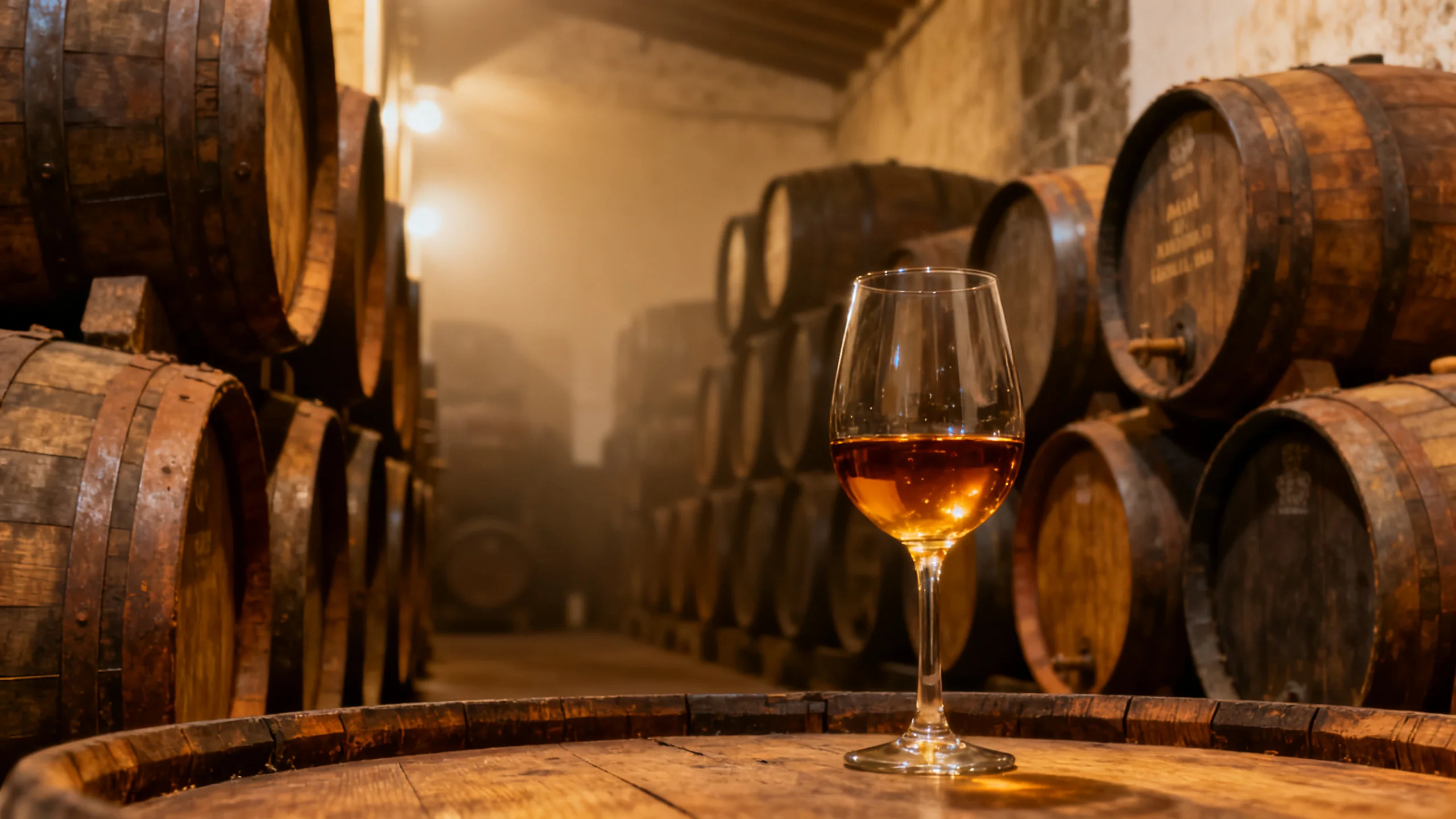
How heat-aged Madeira wine is made, the noble grapes from dry Sercial to sweet Malmsey, its Atlantic trade history, and why an open bottle keeps for months.
Most wine is fragile. It is kept cool, kept dark, and drunk before it tires. Madeira wine is the opposite. It is deliberately heated, deliberately oxidised, and once a bottle is open it will sit happily on a shelf for months without spoiling. There are bottles from the 18th and 19th centuries still being poured today, and still drinking well. Madeira is, for practical purposes, the most indestructible wine in the world.
That toughness is not an accident. It came from a happy discovery on board ship, and the island turned it into a defining product. Understanding how Madeira wine is made, and why it tastes the way it does, explains a good deal about the island itself.
This guide covers how the wine is aged, the grapes behind the styles, the dry-to-sweet scale, the trade that made it famous, and why the bottle never seems to die.
The accidental discovery
In the age of sail, Madeira was a standard provisioning stop for ships heading to the Americas, the West Indies and the East. Casks of the local fortified wine were loaded as cargo and ballast. On the long voyages through the tropics, the wine sat in the hold and cooked, rocked by the swell and warmed for weeks on end.
By rights this should have ruined it. Instead, drinkers found that the heat-treated wine, the vinho da roda or “wine of the round voyage”, tasted better than the wine that had stayed on the island. The heat had mellowed it and given it a deep, slightly caramelised, nutty character. Madeira’s producers took the hint and set out to recreate the sea voyage on land.
Estufagem and canteiro: ageing by heat
There are two ways Madeira reproduces that tropical cooking, one industrial and one slow.
Estufagem is the volume method. The wine is held in heated tanks, or in casks in a warmed room, typically at around 45 to 50 degrees Celsius for at least three months. It is a controlled, efficient way to give everyday Madeira its characteristic baked, tangy profile.
Canteiro is the method for the best wines. Casks are left to age naturally in the warm upper lofts of the lodges, heated only by the island’s climate, for years and often for decades. The wine matures and concentrates slowly, the heat gentle and uneven, the result far more complex. Canteiro wines are the vintage and aged Madeiras that command the high prices and last the longest.
Both methods do the same essential thing: they oxidise and heat-stabilise the wine so thoroughly that nothing left in the bottle can harm it later. That is why an opened Madeira keeps for months, and why century-old bottles survive.
The grapes: the four noble varieties and Tinta Negra
Madeira’s style is named by its grape, and there is an old order to them.
Sercial is the driest. Grown high and cool, it makes a tangy, sharp, almost austere wine, usually drunk as an aperitif.
Verdelho is medium-dry: a touch rounder than Sercial, smoky and nutty, still firmly on the dry side.
Bual (also spelled Boal) is medium-rich: darker, raisined, soft, a wine for the end of a meal.
Malmsey, from the Malvasia grape, is the sweetest and most famous: dark, luscious, intense, the classic dessert Madeira.
These four are the “noble” grapes, white varieties that traditionally name the four classic styles. Alongside them is Tinta Negra, a red grape that is by far the most planted on the island and the backbone of most everyday and three-year Madeira. Tinta Negra can be made across the sweetness range, and modern labelling increasingly names it openly rather than borrowing the noble style names.
The dry-to-sweet scale
Madeira is best understood as a single family of wines arranged from bone-dry to intensely sweet.
| Style | Sweetness | Typical use |
|---|---|---|
| Sercial | Dry | Aperitif, before a meal |
| Verdelho | Medium-dry | Aperitif, light dishes |
| Bual | Medium-rich | After dinner |
| Malmsey | Sweet | Dessert, cheese |
All of them are fortified, with grape spirit added to lift the alcohol to around 19 or 20 per cent, and all of them carry the bright, lifting acidity that keeps even the sweetest Malmsey from feeling cloying. A tasting flight usually runs the whole scale in one sitting; the Madeira wine tasting page covers how to do this in Funchal.
The wine that crossed the Atlantic
Madeira wine’s heyday was tied to the Atlantic trade routes. Because it survived heat and motion that destroyed other wines, it travelled superbly, and it became the wine of the colonial Atlantic. It was hugely popular in colonial America; the story that the United States Declaration of Independence was toasted with Madeira is part of the wine’s lore. It reached Britain, the Caribbean and India in quantity, all of it improving rather than spoiling on the way.
That trade shaped the island. The merchant families, many of them British by origin, built the lodges of Funchal and the hillside quintas, and tied Madeira’s economy to the wine for centuries. The grand estate houses you see on the slopes above the capital were, in large part, paid for by this nearly immortal wine.
Frequently asked questions
Why does Madeira wine last so long once opened?
Because it is already fully heated and oxidised during ageing. The process that makes Madeira also makes it stable: there is nothing fresh left for air to damage. An opened bottle keeps for months, and well-stored old bottles can last for a century or more.
What is the difference between estufagem and canteiro?
Estufagem heats the wine quickly in tanks or warmed rooms, usually for a few months, and is used for everyday Madeira. Canteiro lets casks age slowly in the warm lofts of the lodges, using only the island’s climate, for years or decades. Canteiro produces the finest and longest-lived wines.
Which Madeira should I try if I prefer dry wine?
Start with Sercial, the driest of the noble styles, tangy and crisp and good as an aperitif. Verdelho is the next step up, medium-dry and a little rounder. Bual and Malmsey are the richer, sweeter end, better suited to after a meal.
Is Tinta Negra a lesser grape?
Not lesser, just different. Tinta Negra is the most widely planted grape on Madeira and the basis of most everyday and 3-year wines. It can be made dry or sweet, and good producers now label it by name. The four noble white grapes remain the benchmark for the finest aged Madeiras.
Where can I taste Madeira wine on the island?
The historic lodges in Funchal run tastings through the full dry-to-sweet range, and a flight is the best way to learn the styles in one sitting. See the Madeira wine tasting guide for how it works and what to expect.