Tandem paragliding over Madeira's west coast and inland slopes: what a flight involves, the launch sites, weather dependence, and how to book sensibly.
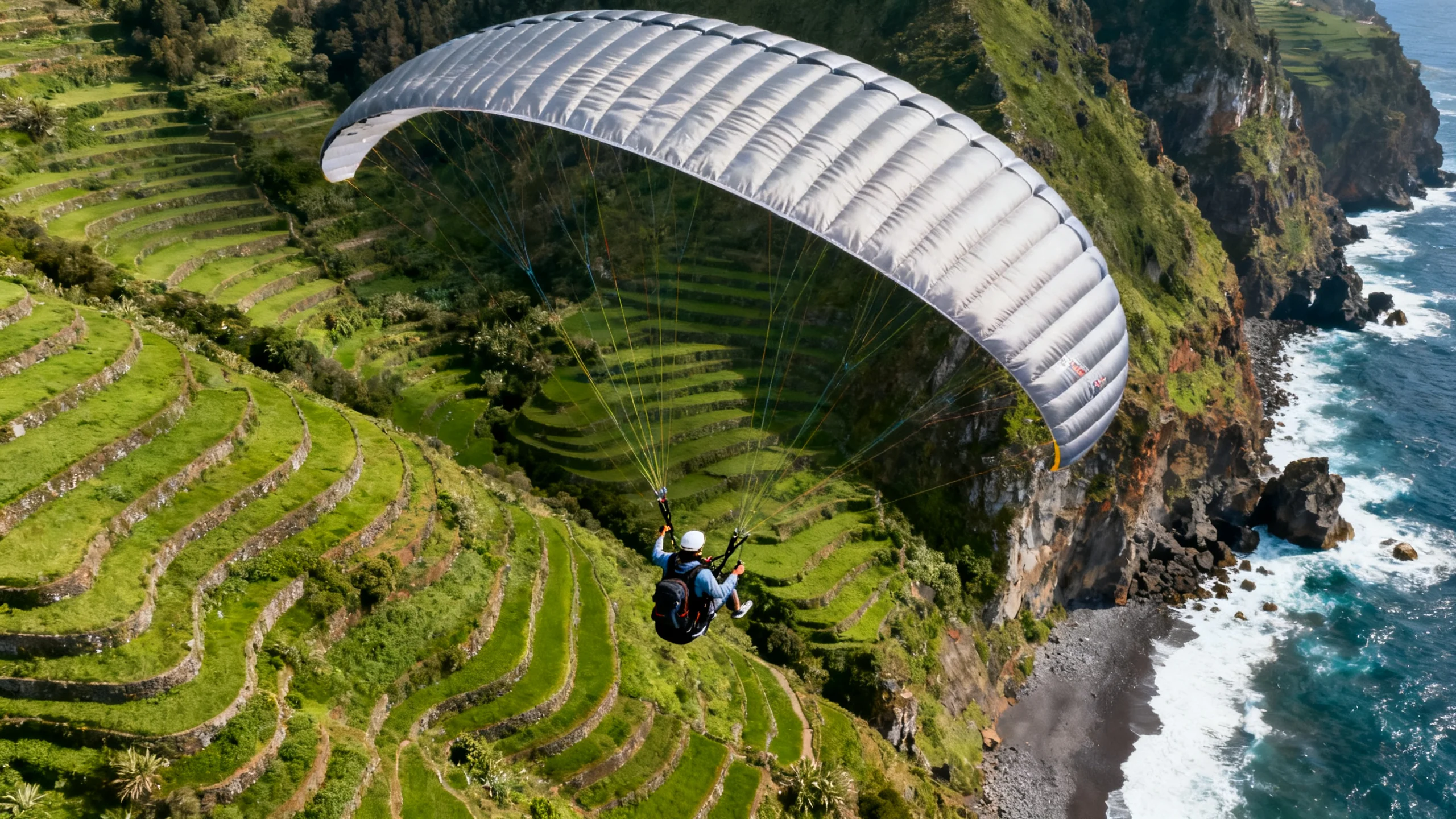
Madeira’s terrain is built for paragliding. The island rises steeply from the sea, the slopes catch reliable sea breezes, and a tandem flight gives you a few quiet minutes looking down on terraced hillsides, cliffs and the Atlantic. You do not need any experience: on a tandem flight a qualified pilot does all the flying, and you are clipped in alongside, free to look around.
The catch is the weather. Paragliding is entirely conditions-dependent, and flights are cancelled or moved more often here than for almost any other activity on the island. This guide covers what a flight involves, where the launch sites are, why the weather rules everything, and how to book in a way that does not waste your trip.
The flight, in brief
| Item | Detail |
|---|---|
| Where | Launch sites on the west coast and on inland slopes |
| Flight time | Roughly 10 to 25 minutes in the air, weather depending |
| Total time | Allow 2 to 4 hours including transfer, waiting and the flight |
| Provided | Harness, helmet, the wing and a qualified tandem pilot |
| Good for | First-timers and anyone wanting a calm, scenic flight |
What a tandem flight is like
The day is built around finding a launch site with the right wind. Once the pilot picks one, you drive up to it, get fitted with a harness and helmet, and get a short briefing. The launch itself is the only active part for you: you run a few steps down the slope with the pilot until the wing lifts and your feet leave the ground.
After that you sit back in the harness and the pilot flies. A standard tandem is calm and gentle, a slow glide with the island spread out below. If you want it, many pilots can add some gentle turns or spirals near the end, but a smooth, scenic flight is the default and there is no pressure to do more. The landing is a short controlled touchdown on flat ground.
Launch sites and what you see
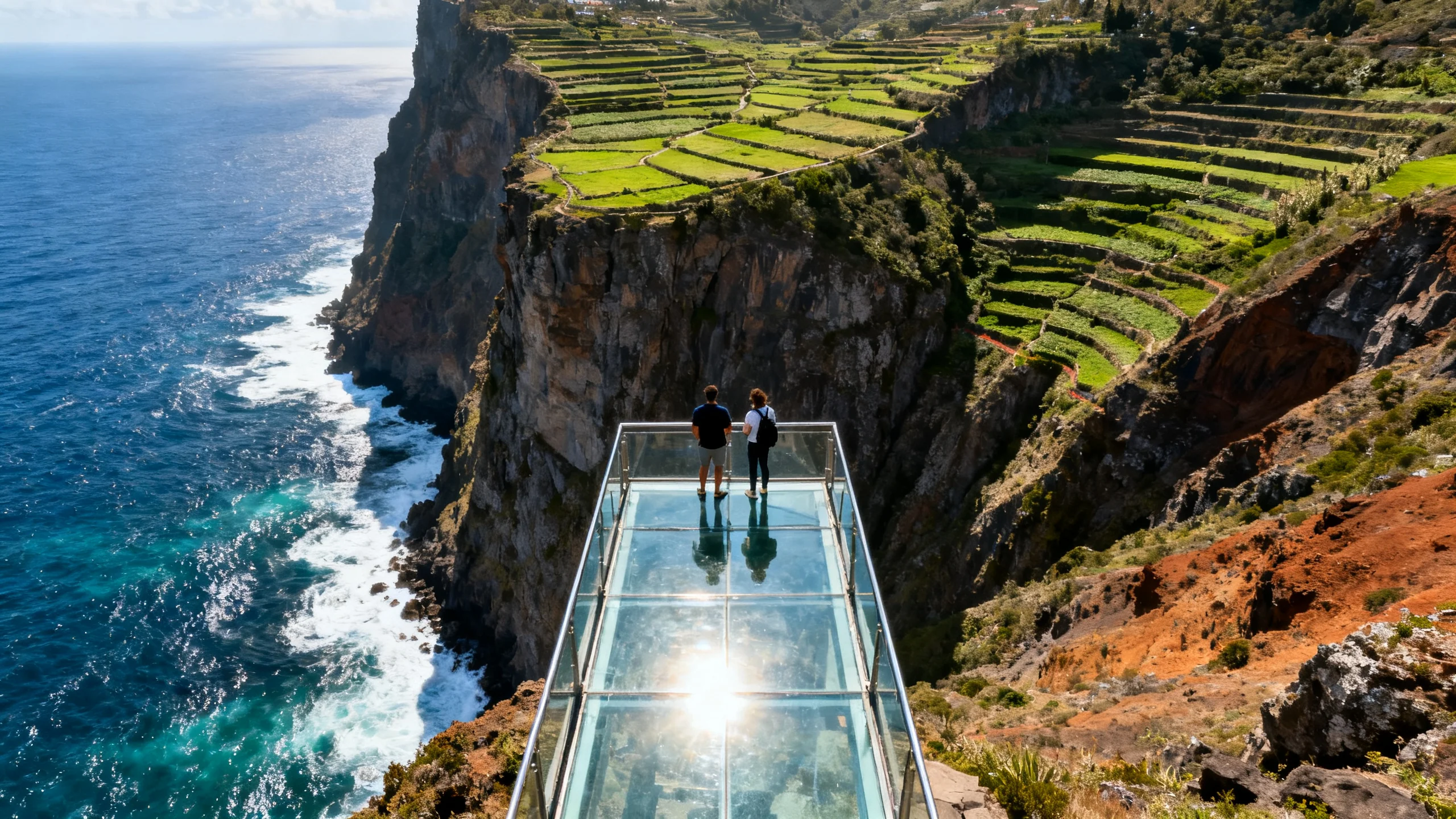
Pilots use several sites depending on wind direction. The west of the island, around the slopes above Calheta and the Ponta do Sol valley, gets sunny, stable conditions and views over terraces dropping to the sea. Inland sites on the higher slopes give a different flight, more mountain than coast, with the green ridgelines below.
You will rarely get to choose the site. The pilot picks whatever works on the day, and a flexible attitude to location is part of the deal. Every site gives a good flight; the operator is choosing for safety, not scenery.
Why the weather rules everything
A tandem wing needs a fairly narrow band of conditions: a steady breeze, not too strong, from a direction that suits an available launch site, and no rain or low cloud on the slope. Madeira’s weather changes fast and varies sharply from one side of the island to the other, so a forecast that looks fine in Funchal can still rule out flying on a given hillside.
Operators decide whether to fly on the morning itself, often after checking the sites in person. Same-day cancellations are normal and not a sign of a poor operator. The way to plan around this is simple: book for the first half of your trip, treat the slot as provisional, and have a backup plan for the day.
Who should and should not go
A tandem flight suits almost anyone with reasonable mobility. You need to be able to run a few steps on the launch and to lift your legs for landing, but no fitness or experience beyond that is required. Operators set weight limits, both minimum and maximum, so check yours falls inside the range when you book.
If you are strongly prone to motion sickness, ask for a straight scenic flight with no spirals, and say so before you launch. Anyone with recent injuries or relevant medical conditions should clear it with the operator first.
Frequently asked questions
Do I need any experience to paraglide?
No. On a tandem flight a qualified pilot does all the flying and you are strapped in alongside. The only thing you do is run a few steps at launch and lift your legs for landing. It suits complete first-timers.
How likely is my flight to be cancelled?
More likely than for most activities. Paragliding needs a narrow band of wind and weather, and same-day cancellations are common. Book for early in your trip so you can rebook, and keep the morning flexible rather than tied to a fixed time.
Is it scary or smooth?
A standard tandem is smooth: a slow, calm glide. The launch is the only sharp moment. Pilots can add gentle spirals near the end if you want a thrill, but a quiet scenic flight is the default. If you are prone to motion sickness, ask for no spirals before you launch.
Are there weight limits?
Yes. Operators set both a minimum and a maximum passenger weight for tandem flights, since the wing is sized for a range. Check the exact limits when you book so there is no surprise at the launch site.
When is the best time of year to fly?
The warmer, drier months from spring through autumn give the most reliable conditions and the most flyable days. Flights can run year-round when the weather allows, but winter brings more wind and rain, and more cancellations.