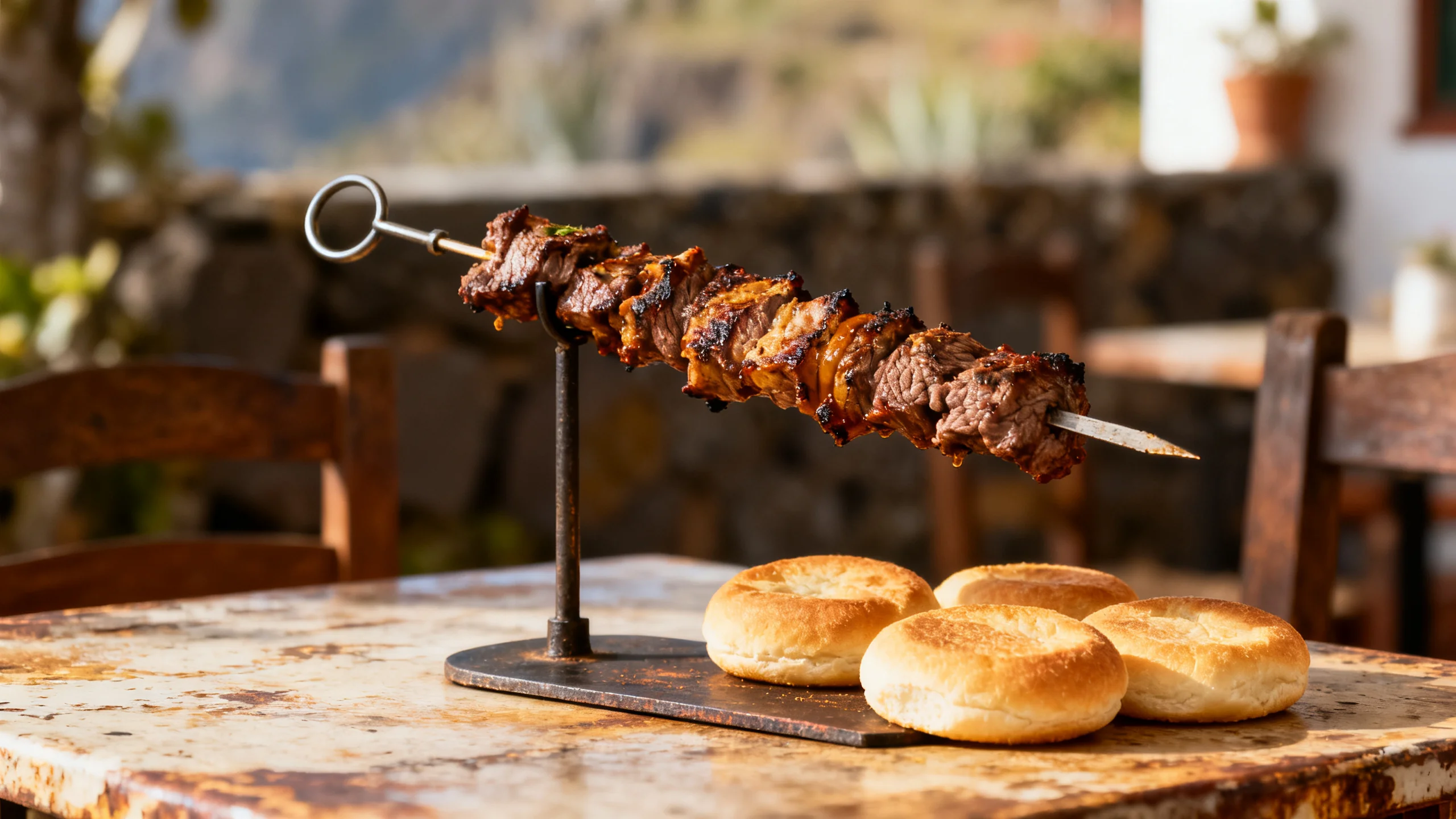
A guide to the real food of Madeira: espetada on a bay-laurel skewer, bolo do caco, black scabbard fish with banana, milho frito, limpets, and poncha.
Madeiran food is simple, generous and built around what the island has: beef from the hills, fish from deep water, maize, garlic, bay laurel, and the small sweet banana that grows on the south coast. It is not refined cooking and it does not try to be. It is the food of a farming and fishing island, served in large portions and best eaten without ceremony.
A traveller who sticks to hotel buffets and tourist menus will miss most of it. The genuine dishes turn up in village restaurants, at roadside grill houses, and at the summer festivals where whole communities cook outdoors. Knowing what to order, and what each dish actually is, makes the difference.
This guide covers the core of the Madeiran table: the skewered beef, the island bread, the scabbard fish, the fried maize, the limpets, and the drink that ties it all together.
Espetada: beef on a bay-laurel skewer
Espetada is the dish most associated with Madeira. It is chunks of beef, seasoned simply with garlic and coarse salt, threaded onto a skewer and grilled over wood or charcoal.
The detail that matters is the skewer. Traditional espetada is cooked on a espeto cut from a branch of bay laurel, the wood that grows wild on the island. As the meat cooks, the green laurel wood scents it from the inside. In many restaurants the loaded skewer is brought to the table hanging from a tall metal stand, and you slide the meat off piece by piece. It is usually served with bolo do caco and milho frito, and it is a dish for sharing.
Bolo do caco: the island bread
Despite the name, bolo do caco is not a cake. It is a flat, round, soft wheat bread, and it is everywhere on Madeira.
The name comes from the cooking method: it is baked on a caco, a flat basalt stone slab heated over a fire, which gives the bread its slightly chewy crust and its disc shape. It is almost always served warm and split, spread thickly with garlic butter and parsley. On its own it is a snack sold from street stalls; on the table it is the standard accompaniment to espetada and grilled fish. If you eat one thing on Madeira, this is a strong candidate.
Espada: the black scabbard fish
Espada is the black scabbard fish, and it is the island’s signature seafood. It is a long, eel-like, deep-water fish, jet black, with large eyes and a faintly alarming appearance, caught at great depth in the waters off Madeira.
The flesh, by contrast, is white, soft and mild. The classic local preparation is espada com banana: a fillet of scabbard fish, often lightly floured and fried, served with fried banana. The pairing of a delicate white fish with sweet fruit sounds strange and works well, and it is one of the dishes most worth trying precisely because you will rarely meet it anywhere else. You can see the fresh fish, black and glistening, in the market hall of the Mercado dos Lavradores in Funchal.
Milho frito: fried maize
Milho frito is fried maize, and it is the island’s answer to a chip. A thick maize porridge is cooked, left to set firm, then cut into cubes and deep-fried until the outside is crisp and the inside stays soft.
It is a side dish, served alongside espetada and grilled meats, and it is far better than its plain description suggests. Maize was an important crop on Madeira, and milho frito is one of the most honest examples of island cooking making something good out of a humble staple.
Lapas: grilled limpets
Lapas are limpets, the shellfish that cling to the rocks around the coast. They are served grilled in their shells, usually a dozen or so to a sizzling metal dish, dressed simply with garlic, butter and a squeeze of lemon.
They are a starter, eaten with a small fork and plenty of bread to mop the buttery juices. The texture is firm and the flavour is clean and briny. Like much of the best Madeiran food, lapas are unfussy and depend entirely on being fresh.
Poncha: the island drink
No survey of the Madeiran table is complete without poncha, the traditional drink of the island. It is made from aguardente de cana, the local sugarcane spirit, mixed with honey and citrus juice, traditionally lemon, and stirred with a wooden tool called a mexelote.
It originated as a fisherman’s and farmer’s drink, and a folk remedy for colds. The classic version is the poncha regional with lemon; passion-fruit and orange versions are common in bars. It is stronger than it tastes, which is worth remembering. Câmara de Lobos, the fishing town just west of Funchal, is its traditional home, and the small bars there are the place to try it properly.
Frequently asked questions
What is the most typical dish to try in Madeira?
Espetada, skewered beef grilled on a bay-laurel branch, is the dish most identified with Madeira, usually served with bolo do caco bread and fried maize. The black scabbard fish with banana is the signature seafood. Trying both gives you a good sense of the island’s cooking.
Is bolo do caco a cake?
No, despite the name. Bolo do caco is a soft, flat, round wheat bread, baked on a hot basalt stone. It is usually served warm with garlic butter, either as a snack on its own or as the standard bread alongside grilled meat and fish.
What does black scabbard fish taste like?
It looks dramatic, long, black and deep-eyed, but the flesh is white, soft and mild. The classic Madeiran preparation pairs a fried fillet with fried banana, a sweet-and-savoury combination that works much better than it sounds.
What is poncha and is it strong?
Poncha is a traditional Madeiran drink made from sugarcane spirit, honey and citrus juice. It tastes smooth and fruity, which is exactly why it catches people out: it is considerably stronger than it seems, so pace yourself.
Where should I go to eat traditional Madeiran food?
Head inland and to the villages rather than the seafront tourist restaurants. Wood-fired grill houses do the best espetada, small fish restaurants in towns like Câmara de Lobos serve the freshest seafood, and the summer village festivals cook traditional dishes outdoors for the whole community.